
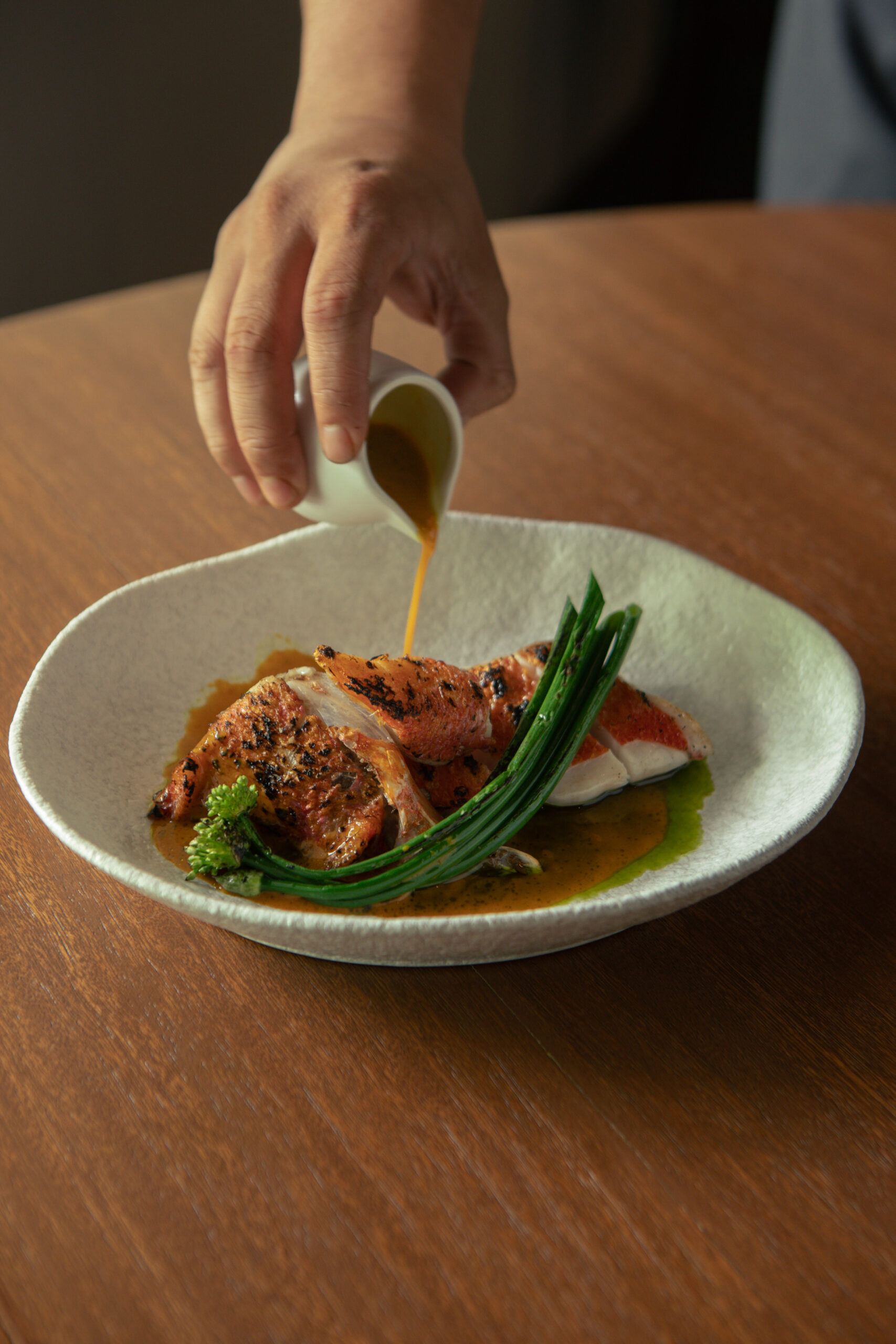

Indonesia’s cuisine has never stood still. Long before contemporary restaurants began reinterpreting regional dishes, the archipelago’s food culture had already evolved through migration, trade, royal courts, local traditions, and changing landscapes. Every generation has contributed its own chapter, adapting ingredients, techniques, and dining customs while remaining connected to a strong sense of place. Today’s chefs are continuing that process. Their work is not driven by the question of how to preserve Indonesian culinary heritage unchanged, but rather how to carry it forward while remaining grounded in the knowledge that shaped it.

Reimagining
One response can be found in Jakarta, where a new generation of restaurants is expanding the language of Indonesian cooking rather than replacing it. Instead of reproducing familiar dishes exactly as they have always been prepared, these kitchens explore how local ingredients and culinary memories can be expressed through contemporary techniques. The objective is not to distance themselves from tradition, but to demonstrate that Indonesian cuisine is capable of evolving without losing its Indonesian culinary heritage identity.
At August, Hans Christian and his team build their menus around ingredients sourced from producers across the country, from seafood landed in Lombok and vegetables grown in Lembang to coffee from Lampung and palm sugar from Bali. Contemporary technique is applied with restraint, allowing the produce itself to remain the focus. Rather than treating local ingredients as supporting elements, the kitchen presents them with the same level of precision often associated with international fine dining, suggesting that Indonesian agriculture can comfortably occupy the centre of the conversation.
ESA arrives at a similar destination through a different route. Aditya Muskita’s latest tasting menu, Jakartana, draws inspiration from the city itself, embracing the collisions and unpredictability that define Indonesia’s capital. Lobster meets aloe vera, pork is paired with abalone, while familiar desserts are reimagined through unexpected combinations. These pairings are not intended as mere novelty. Instead, they reflect Jakarta’s long history as a meeting point of cultures, where new influences have continually reshaped the city’s culinary identity. The restaurant reminds diners that Indonesian cuisine has never developed in isolation, but has always absorbed ideas from elsewhere before making them its own.
Together, these restaurants demonstrate that reinterpretation need not mean abandoning tradition. Instead, they expand its vocabulary, allowing familiar ingredients and flavours to speak in ways that feel relevant to contemporary diners while remaining unmistakably Indonesian.
Rediscover
If reinterpretation asks what Indonesian cuisine can become, another group of chefs is asking a more fundamental question: where does Indonesian culinary heritage begin? Increasingly, the answer lies not in the kitchen, but in the fields, forests, fisheries, and farms that supply it. Discussions surrounding contemporary Indonesian cuisine are shifting towards provenance, biodiversity, and seasonality, recognising that a meaningful understanding of food begins long before the cooking itself.
This philosophy is perhaps most clearly expressed at the newly opened Suara. Rather than building its identity around elaborate techniques, Eelke Plasmeijer and Ray Adriansyah begin with Indonesia’s remarkable biodiversity, placing producers and seasonal ingredients at the centre of their cooking. The kitchen’s philosophy suggests that contemporary Indonesian cuisine does not necessarily require greater complexity. Sometimes it requires closer attention to what has always been available, allowing ingredients to retain their own character before they are transformed on the plate.
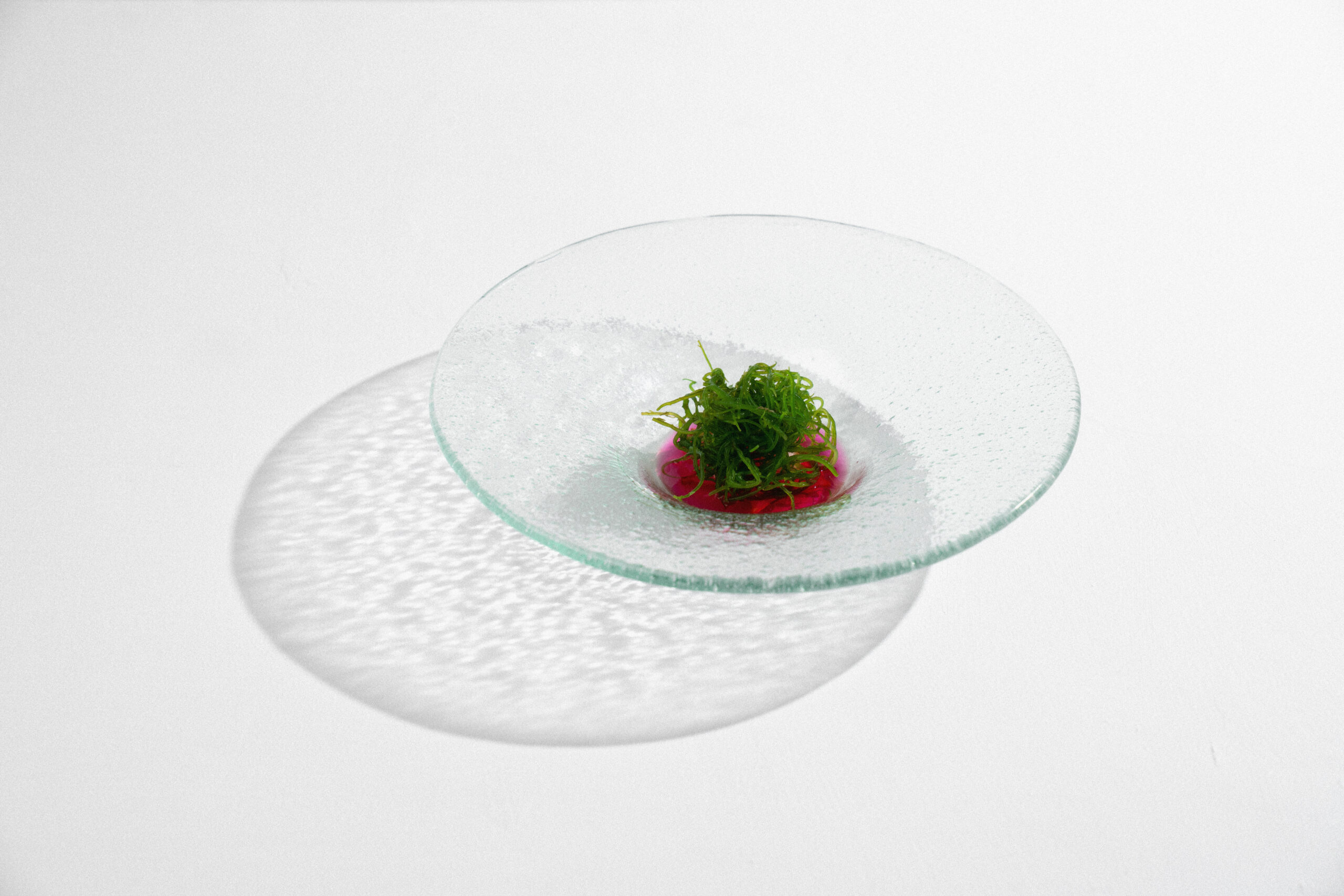
Rumari, at Raffles Bali, reaches a similar conclusion through a different framework. Much of its menu follows an 80:20 sourcing philosophy, where the overwhelming majority of ingredients are obtained from Indonesia, with imports reserved only for products that cannot reasonably be sourced locally. Rather than functioning as a marketing statement, the approach led by Chef Gaetan Biesuz influences every stage of menu development, encouraging the kitchen to work within the possibilities offered by Indonesia’s own producers. Regional fisheries, small farms, artisan growers, and indigenous ingredients become the foundation upon which each dish is built.
Elsewhere, restaurants such as John Hardy’s The Long Table continue this broader movement by placing seasonal produce and relationships with local suppliers at the heart of their menus. While each kitchen interprets ingredients differently, they share a common understanding that contemporary Indonesian cuisine becomes stronger when it begins with a deeper appreciation of the country’s own natural resources. The result is a shift in perspective. Rather than asking what can be added to Indonesian cuisine, these restaurants first consider what has always been there.
Remember
Ingredients alone cannot fully explain Indonesia’s culinary identity. Recipes are shaped by histories, rituals, language, and understandings of flavour passed down through generations. Preserving Indonesian culinary heritage, therefore, extends beyond safeguarding individual dishes; it also involves protecting the ideas that gave rise to them.
This is where Pracimasana Mangkunegaran occupies a distinctive place within Indonesia’s contemporary dining landscape. Established under the direction of Mangkunegaran Palace, it describes itself as the Mangkunegaran Culinary Cultural Laboratory, positioning research alongside hospitality. Rather than beginning with historic recipes, its work explores the principles that have shaped Javanese cuisine for centuries.
Central to this research is the concept of the Six Ancient Javanese Flavours – sweet, salty, sour, bitter, spicy, and sepat (astringency) – which Pracimasana identifies as the foundation of classical Javanese culinary knowledge. Seasonal cycles also guide the research programme, with different ingredients studied during the rainy and dry seasons to reflect the rhythms of nature, rather than maintaining a fixed repertoire throughout the year. The emphasis shifts from conserving recipes to understanding the systems of thought that once informed them, recognising that knowledge itself is an essential part of culinary heritage.
This perspective offers an important counterpoint to contemporary reinterpretation. Before a tradition can evolve, it must first be understood. Pracimasana suggests that innovation and historical research are not opposing ideas, but complementary ones.

Other restaurants contribute to this conversation from different angles. Vallian Gunawan of Kindling combines contemporary cooking with Asian flavours while remaining attentive to regional ingredients, whereas Arief Rachman crafted TAMU as a place where shared dining and conversation are central to the experience, reminding diners that hospitality itself forms an equally important part of Indonesia’s culinary identity. Each demonstrates that heritage survives not only through recipes, but through the customs, relationships, and values that continue to shape the dining table.
Reclaim
None of these restaurants offers a definitive answer to what Indonesian cuisine should become. Nor should they. The archipelago has always been defined by diversity, exchange, and adaptation. What unites this generation of chefs is not a shared style of cooking, but a shared willingness to ask what deserves to be carried forward
Perhaps that is what preserving heritage means today: not safeguarding recipes behind glass, nor treating tradition as something fixed, but understanding the ideas that have shaped Indonesian cooking for generations and allowing them to continue evolving. In doing so, these restaurants are not simply safeguarding or being provident with Indonesian cuisine; they are ensuring that it remains a living tradition, capable of responding to the present while remaining firmly connected to its past.
