
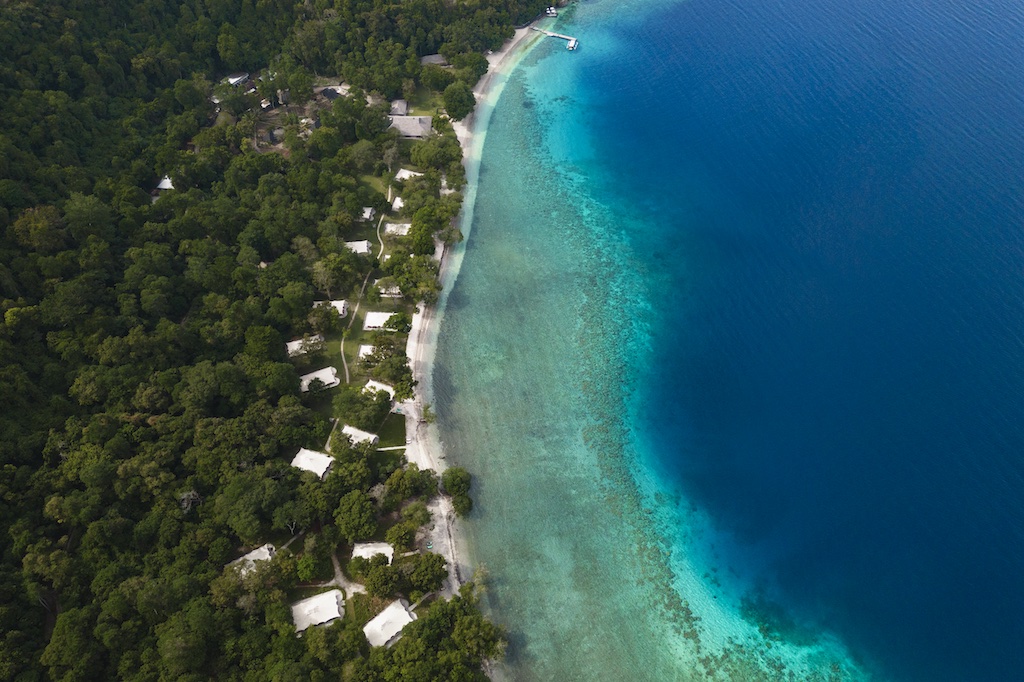

Moyo Island is a protected national park in West Nusa Tenggara. Amanwana is its only camp — 17 tents, no itinerary, and no infrastructure designed for children. We brought our five-year-old anyway, and Amanwana with kids turned out to be the best decision we almost didn’t make.
The camp that wasn’t built for us
The brochure doesn’t picture children. Everyone who heard we were taking a five-year-old to Amanwana offered the same polite smile. Kaiden, for his part, had already spotted the Flores Sea through the speedboat window and was trying to stand up.
Amanwana was designed for two – Champagne at the tide line, silence so complete you can hear the reef. Travelling to Amanwana with kids was never part of the original brief. We booked it anyway, because a protected island with reef sharks in the bay, a waterfall in the jungle interior, and whale sharks an hour offshore felt less like a gamble and more like a match for a child who treats the ocean as a personal challenge.
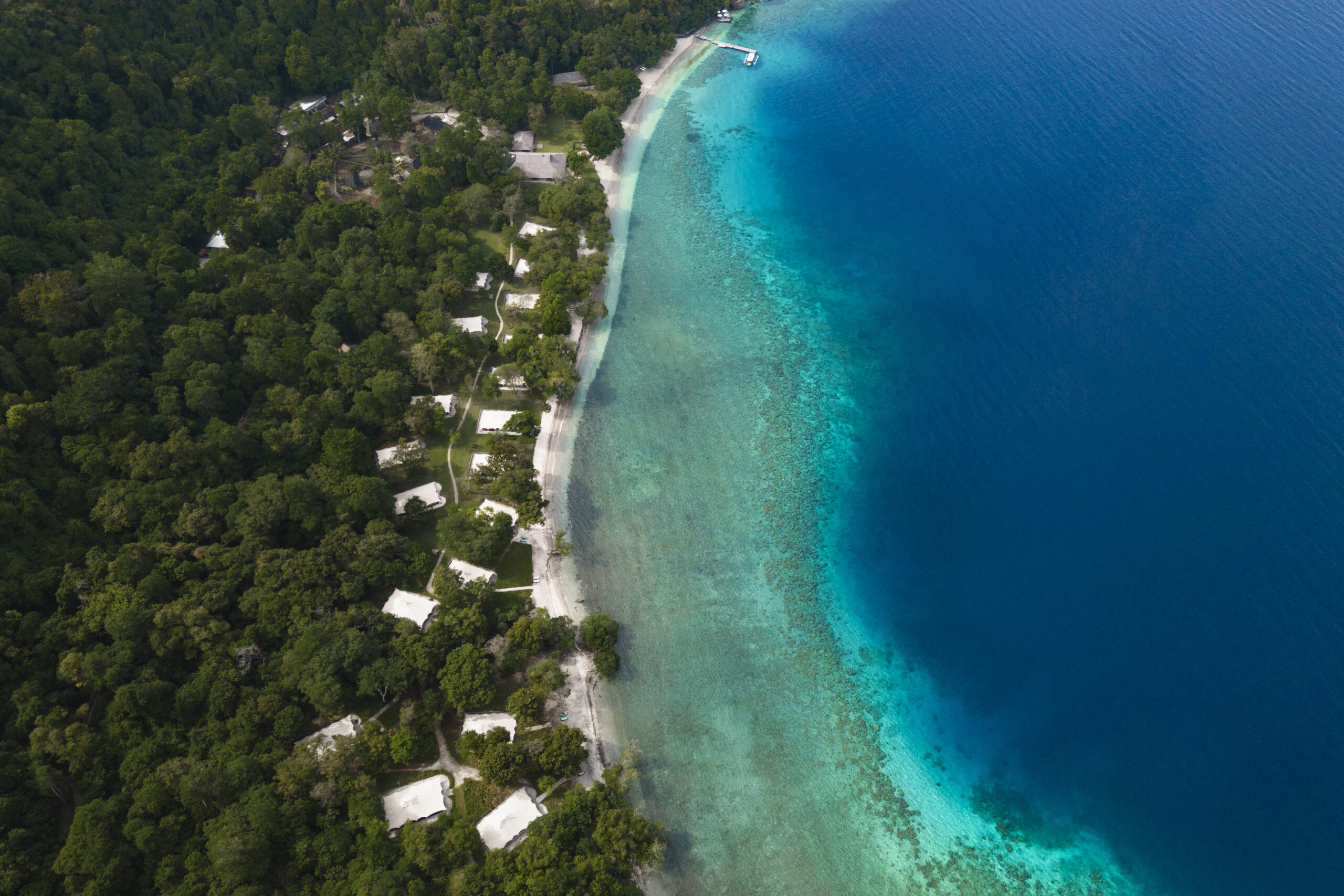
Moyo Island sits eight degrees south of the equator in West Nusa Tenggara – 36,000 hectares of national park where the Flores Sea is your first sight and last sound every day. Amanwana’s 17 ocean-front tents are positioned precisely as that implies: timber decks suspended metres above the tide line, high ceilings drawing the sea breeze through, the jungle beginning exactly where the boardwalk ends. Kaiden gave it four seconds before he disappeared towards the water. That, we quickly understood, is how Amanwana works.

Amanwana With Kids on the Trail: Ridge to Crocodile Head
The Amanwana Ridge track rises from the helicopter pad above camp and traces the ridgeline south to Crocodile Head – a dramatic headland that earns its name from the water, where the rocky profile reads exactly as advertised. It’s roughly an hour’s return on foot and worth every minute.
The humidity arrives immediately. By the time the camp drops below the treeline, the jungle has closed in completely – banyan roots the size of furniture, light coming through in columns, the canopy alive with things that haven’t noticed you yet. Furthermore, we went early, which the camp rightly recommends: the temperature is manageable and the birdlife is at its most active. What appeared to be a Flores hawk-eagle turned above us, and Kaiden went rigid mid-stride, hand raised, silent in a way that felt borrowed from a different child.
At Crocodile Head, the view arrives without warning: rugged coastline, the Flores Sea pressing hard against the rocks below, Sumbawa’s outline hanging across the water in morning haze. The Coastal Cliff Trek continues further along the same ridgeline – monkeys, fruit bats, extraordinary birdlife – and it is now firmly on the list for a return visit. Above all, the trail is one of the most underrated parts of Amanwana with kids – unscripted, unhurried, and entirely theirs to lead.
Mata Jitu Waterfall, Moyo Island: Barry’s Falls in the tropical interior
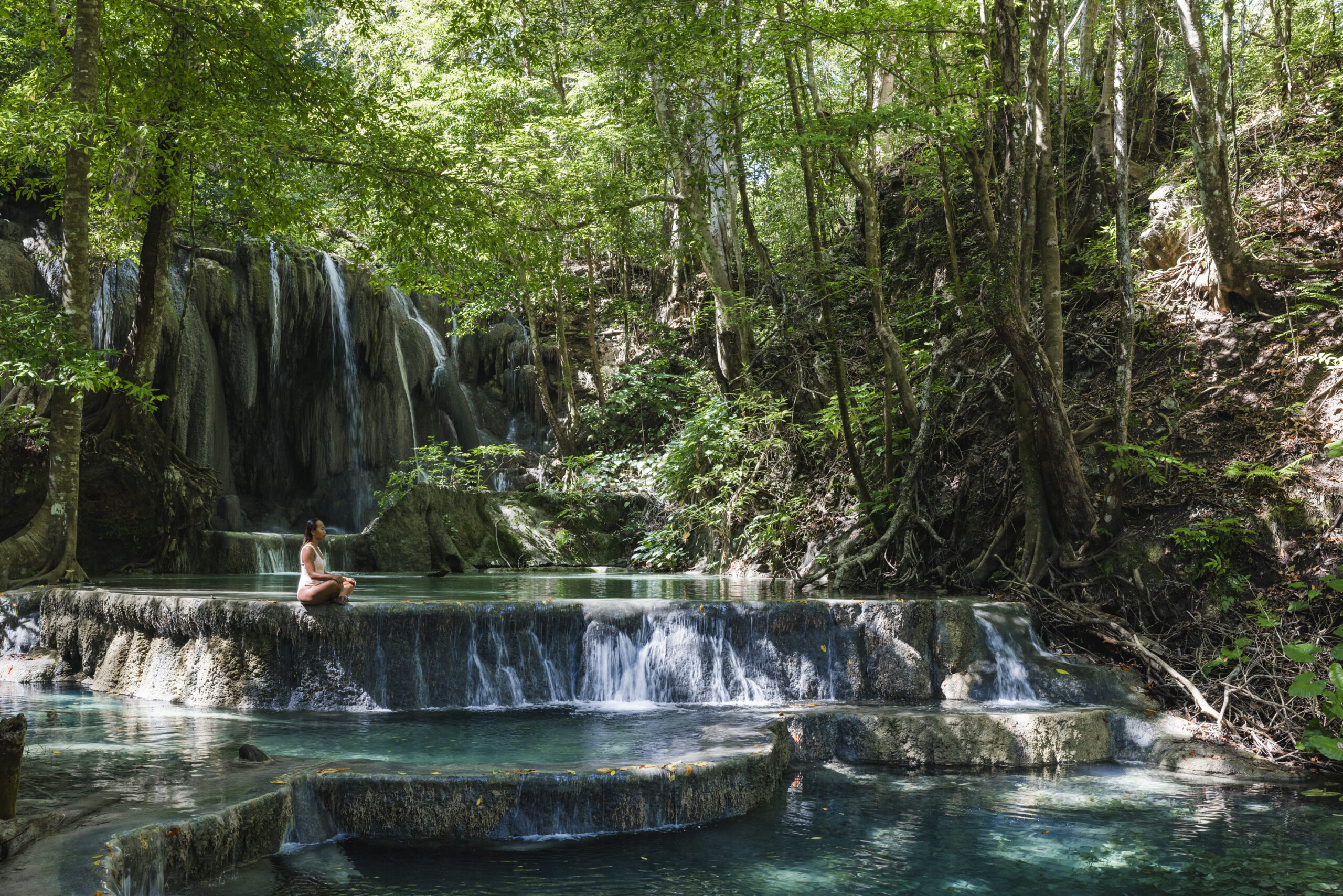
Mata Jitu — also known as Barry’s Falls — sits at the centre of Moyo Island, named after Barry Lees who first discovered Amanwana Bay. A jungle trail leads inward from camp, deep enough that the coast disappears entirely behind you. The falls themselves are a series of cascading limestone pools fed by natural springs: cold, clear, and so clean the water catches light like cut glass.
Kaiden treated the walk in as a field expedition. When the canopy finally broke and the falls came into view – and into earshot – he was in the water before we could say a word.
The pools drop in tiers across the limestone shelf, each a natural plunge pool cold enough to stop you mid-breath. We floated in the lower pools and watched the light shift across the jungle ceiling above us. However, there are few more complete forms of disconnection than a spring-fed waterfall inside a national park on a protected Indonesian island. Moyo makes no apology for keeping you here longer than you planned.
Whale Sharks in Saleh Bay: the encounter that changed the trip
Nobody tells you that the hardest part of the whale shark excursion is the alarm.
Aman X departs at 4am. At 3.45am, in the dark, with Kaiden half-asleep against a seat cushion and the camp utterly still, the appeal of the Flores Sea feels genuinely abstract. It stops feeling abstract the moment Tambora appears.
Mount Tambora separates from the night sky as the speedboat crosses towards Sumbawa’s north-east coast. Its 1815 eruption was the largest volcanic event in recorded history. By the time Saleh Bay comes into view and the Bagan fishing boats appear on the water, the sun is lifting over the crater rim.
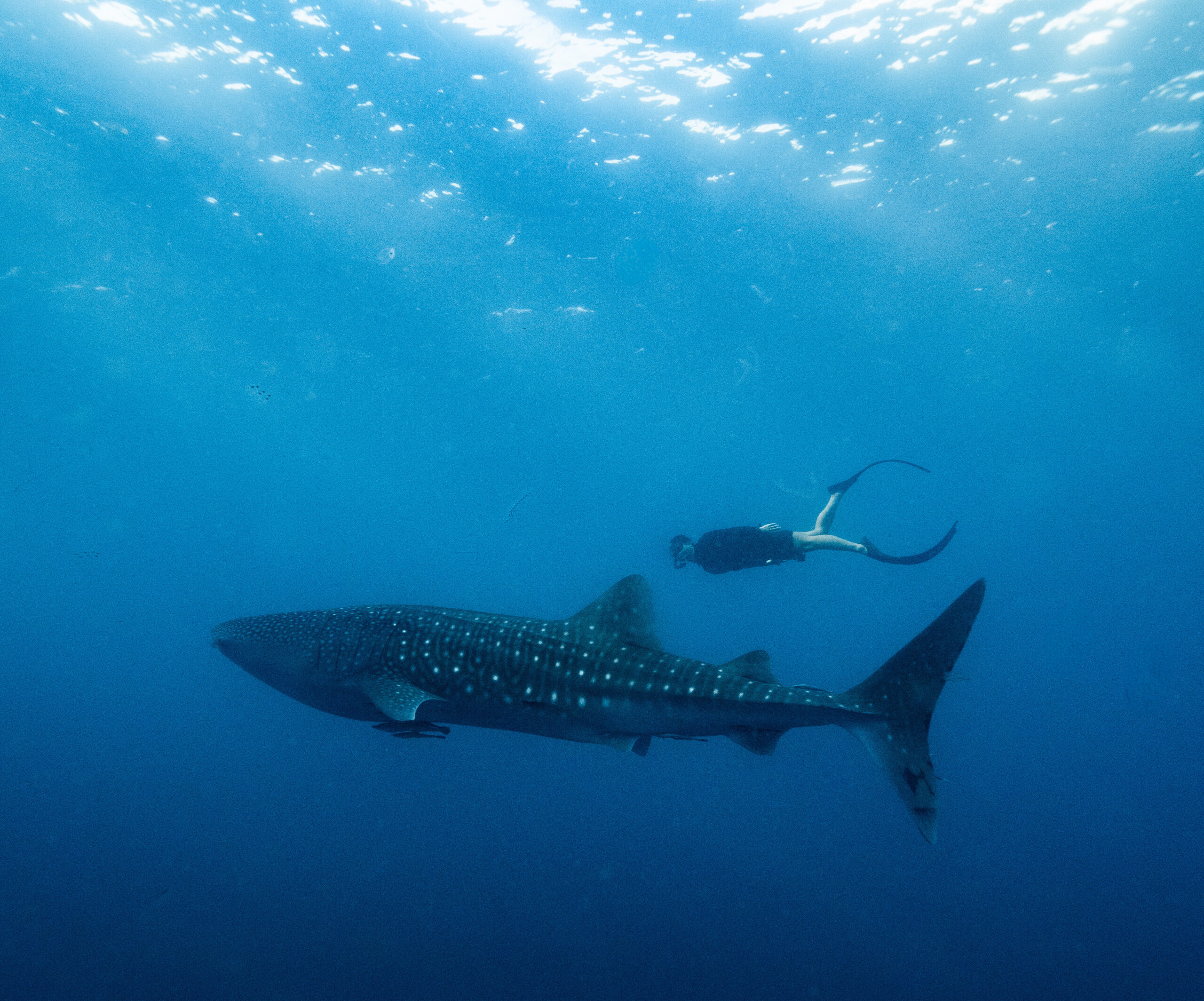
Saleh Bay’s warm, plankton-rich shallows draw whale sharks year-round. They congregate near the Bagan boats where bycatch is regularly released. The team briefed us the evening before – behaviour, positioning, how to move in the water. When the first dorsal fin broke the surface, they guided us in without ceremony. All three of us entered together, Kaiden between us, a hand on each arm, the water pale gold and completely still.
The whale shark moved beneath us – perhaps 11 metres of slow, indifferent animal, its spotted flank catching the early light. Kaiden, who narrates everything, went silent. He floated, masked, watching the shadow pass below him, and said nothing at all.
Back on the boat, with Tambora behind us, he said: “It was bigger than a bus.”
Amanwana partners with Yayasan Konservasi Indonesia (YKI) on every excursion. As a result, each trip contributes directly to whale shark research and tagging in the region. That matters when one of the ocean’s most endangered species is passing three feet beneath your child.

Amanwana With Kids on the Water: Marine Life in a Protected Reserve
Amanwana Bay is a designated marine reserve, and the underwater world here carries the density and confidence of an ecosystem genuinely left alone. Hawksbill and green sea turtles inhabit the bay year-round. Lionfish hold their positions in the coral architecture with proprietary calm. Blacktip reef sharks work the outer edges of the bay as though they own it – which, ecologically, they do.
Turtle Street, a gently sloping reef on the bay’s north end, is the site most guests reach first: resident turtles, anemone fish, moray eels, and the improbably photogenic remains of a submerged jeep colonised by coral. A reef shark banked below us mid-dive without a sideways glance. Surfacing felt like a concession.
For snorkellers, the house reef is calm, current-free, and well-populated. Kaiden, masked and narrating everything, stopped mid-commentary when a lionfish drifted past: “Dad. Dad. That one has spikes.” This is what makes Amanwana with kids work on the water – the reef does all the teaching. The outer reefs extend the offer for certified divers — Panjang Slope, Corner Point, Sea Fan, and Labuan Aji, where the wall drops past 60 metres. The Amanwana dive team matches site to conditions with the ease of people who know these waters intimately.
Before the heat settled on our second morning, we took out the paddle boards. Kaiden was upright within a few attempts – moving across the glassy surface of the bay as the jungle caught the first warmth of the day, no other boats, the mangrove fringe still and quiet. The kind of morning that recalibrates whatever you thought a holiday was supposed to feel like.
Sumbawanese cuisine at Amanwana: Bakela Feast Dinner and Cooking with Ibu Halimah
For families, Amanwana’s culinary experiences offer what very few resorts can: genuine cultural access that a child can participate in without mediation or simplification.
The Bakela Feast Dinner — named from the Sumbawanese word for sharing from one vessel — arrives on a woven bamboo platter at the centre of the table. Siong Sira, fragrant with lemongrass and candlenut. Singang, a tamarind-soured broth with the heat of the island in it. Dishes from West Nusa Tenggara’s deep spice vocabulary, all designed to be pulled from and passed between hands rather than portioned out. Lanterns push back the jungle dark. The camp arranges a traditional Sakeco performance on request — the paired improvised singing of Sumbawa, unhurried and unscripted, much like the meal itself.
Cooking with Ibu Halimah earns its own memory. She has been a neighbour of Amanwana for decades. Her kitchen opens with the authority of someone who has made these dishes a thousand times — and finds no reason to rush. We made ayam taliwang – the iconic grilled chicken of West Nusa Tenggara. Its paste is ground from shallots, garlic, bird’s eye chilli, and terasi (shrimp paste) until the kitchen smells of something between smoke and sweet ferment. The bird goes over charcoal. Edges char. Fat drips.
Kaiden stood on a step stool at the counter while Ibu Halimah guided his hands through the grinding – no shared language, no friction. We ate on her terrace with rice and a sambal that he declared “too spicy” before finishing three helpings.
Amanwana with kids: what to know before you go
Is Amanwana with kids a good idea?
Amanwana has no kids’ club, no programmed activity schedule, and no infrastructure designed specifically for children. What it has is a 17-tent camp intimate enough that the staff know you within hours, a team across every activity that operates with quiet attentiveness, and a national park that does the rest. The dive team reads the water with authority, conditions are thoroughly briefed, and the boats run on time. Kaiden was never in a situation that felt uncontrolled, and almost never conscious of being guided. For anyone considering Amanwana with kids, the answer is straightforward — let the island lead. Done right, Amanwana with kids is less a compromise and more an upgrade.
Best time to visit Moyo Island with children
The dry season – April to November – offers the most stable conditions for trekking, snorkelling, and open-water excursions. Sea conditions are calmer and the heat (consistently 27–30°C) is manageable with early scheduling. Moreover, whale shark encounters in Saleh Bay run year-round, though sea conditions vary outside the dry season.
How to get to Amanwana, Moyo Island
Fly into Sumbawa Besar (SWQ) via Lombok or Bali. Amanwana arranges the speedboat transfer from the Sumbawa Besar waterfront – approximately 30 minutes across the Flores Sea to the camp’s private jetty.
What marine life can you see at Amanwana?
The protected waters of Amanwana Bay host hawksbill and green sea turtles, lionfish, blue-spotted rays, moray eels, and blacktip reef sharks. Further out, the outer dive sites — Panjang Slope, Labuan Aji, Corner Point — add pelagic encounters: tuna, eagle rays, and barracuda. For the rarest encounter of all, whale sharks frequent Saleh Bay year-round, approximately one hour from camp by speedboat.
Amanwana, Moyo Island, Sumbawa Regency, West Nusa Tenggara, Indonesia. Speedboat transfer from Sumbawa Besar (SWQ). For more information, contact +62 37122233, email indonesia.res@aman.com, or visit aman.com.