

Three practitioners in Bali show how wellness is shifting from one-off treatments to structured, repeatable care.
Wellness leadership is shifting from one-off treatments towards practitioners who can read a guest’s habits, stress patterns, and recovery needs, then translate that into a plan people can follow beyond a holiday. In Bali, three different models show how that future is taking shape.
Jonathan Walsh
At COMO Shambhala Estate, wellbeing is not an amenity – it is the architecture of the stay. A multidisciplinary team of experts spanning Ayurveda, yoga, Pilates, fitness, chakra healing and so many more forms the backbone of the experience, ensuring that restoration is not incidental, but intentional.
Within this ecosystem of care, Jonathan Walsh serves as the resident Traditional Chinese Medicine consultant, bringing an approach that feels both time-honoured and quietly contemporary. His sessions unfold with unhurried conversation before moving into the subtle diagnostics of pulse reading and tongue observation – a practice that reveals the patterns beneath disrupted sleep, sluggish digestion, depleted energy or restless mood.
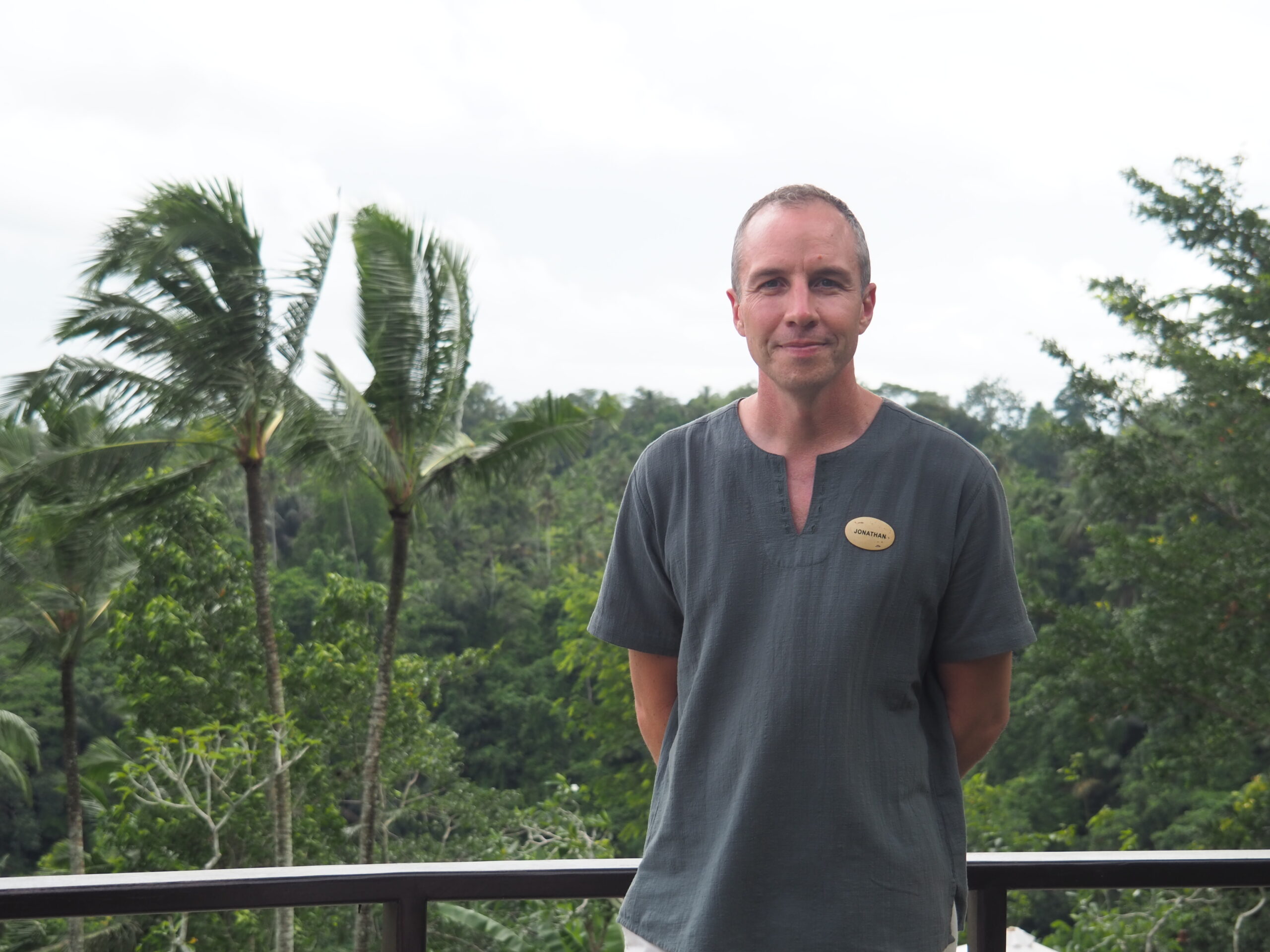
From there, treatment becomes highly individual. Acupuncture, fire cupping, tui-na massage and moxibustion are selected not as a fixed menu, but as responsive tools calibrated to each guest’s constitution and comfort.
“I believe perspective plays a huge role in defining our wellbeing, and that it’s ultimately very personal. I’ve worked with clients who feel mentally overwhelmed or are suffering with physical ailments, yet when they shift how they relate to what they’re experiencing, something changes. The circumstances may not disappear, but that shift in perspective changes their overall state of wellbeing,” he muses.
Certified in hypnotherapy and Emotional Freedom Technique (EFT), Walsh also addresses the emotional circuitry that often underpins physical imbalance. The result is not a single-session fix, but a layered process that unfolds beautifully within COMO Shambhala’s longer-stay programmes – where realignment is cultivated over time, and healing is treated as both science and subtle art.
Jitendra Pokhriyal
Wellness is treated as a lived framework at The Westin Resort Nusa Dua, Bali, and Dr Jitendra Pokhriyal stands at its centre as both practitioner and programme architect. As the wellness ambassador, he bridges science-led expertise with the rhythms of resort life.
Originally from the Himalayas, Dr Jitendra brings academic depth – a Ph.D. in Clinical Nutrition and Human Metabolism – alongside formal training in yoga, pranayama, meditation, Ayurveda and complementary therapies.

His philosophy is articulated through Westin’s six wellbeing pillars: Sleep Well, Eat Well, Move Well, Feel Well, Work Well and Play Well. Guests might begin with metabolic or nutrition consultations, transition into yoga and guided meditation, move through strength training at WestinWORKOUT, and close the day with restorative therapies at Heavenly Spa by Westin. The resort’s expanding wellness infrastructure reinforces this commitment to movement as medicine.
Dr Jitendra’s work suggests that sustainable health is not achieved in isolation, but woven into how families sleep, eat, move and recover together. Grounded in inspiration from his guru, Swami Satyananda Saraswati, and guided by a vegetarian lifestyle rooted in both tradition and efficiency, Dr Jitendra embodies a model of modern hospitality leadership – one where science informs spirit.
Heny Ferawati
There is a certain stillness that defines the experience at Four Seasons Resort Bali at Sayan. Within this riverside sanctuary, Heny Ferawati, known warmly as Ibu Fera, is a former Buddhist nun who spent years studying Dharma in monasteries across Myanmar and Thailand, she carries the quiet authority of lived devotion.
Since joining Four Seasons in 2014, Ibu Fera has shaped a rhythm of mindfulness within the resort. She leads complimentary meditation sessions twice daily and hosts weekly Life Talks that address universal themes – stress, compassion, inner peace – in a tone that feels more like conversation than sermon.
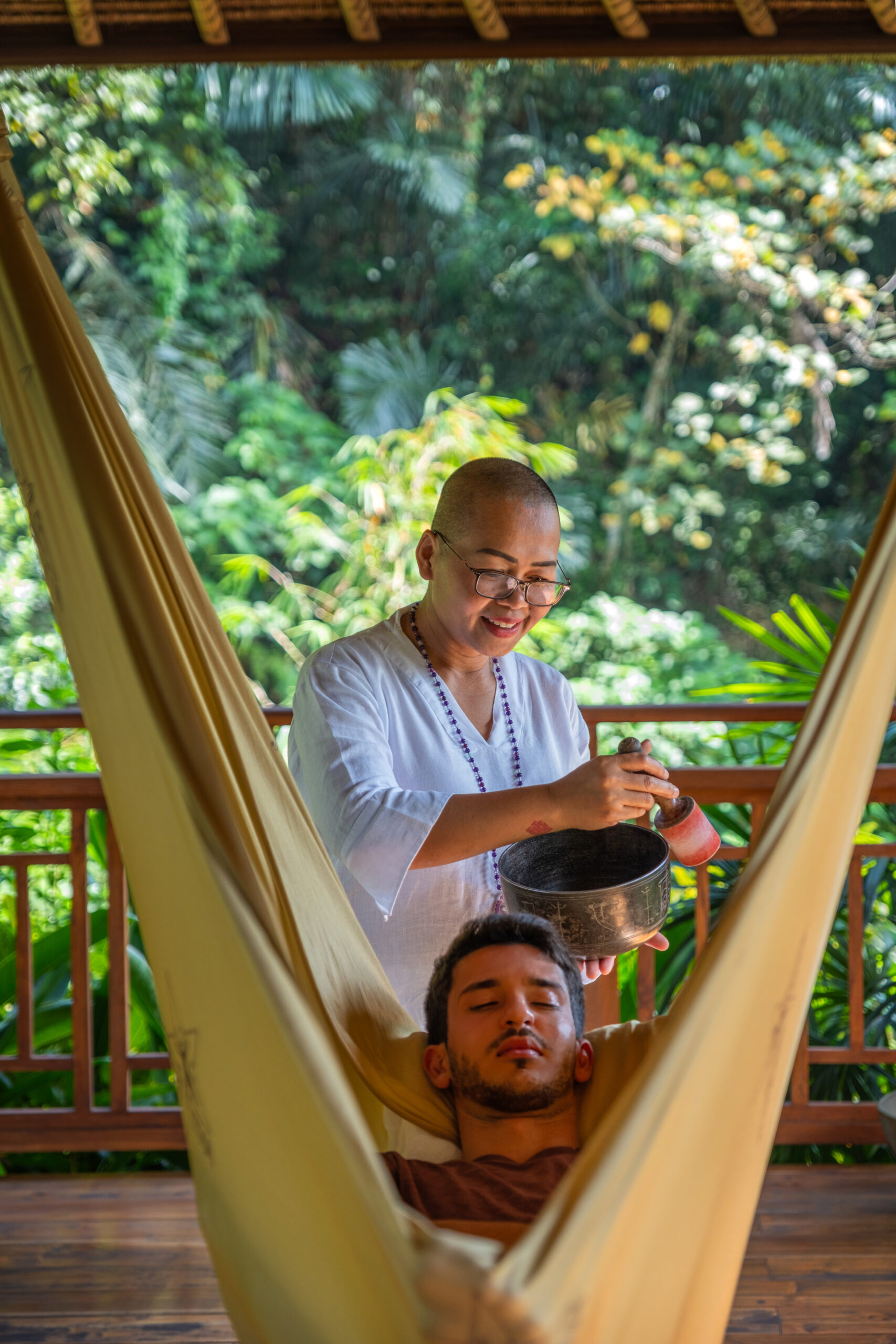
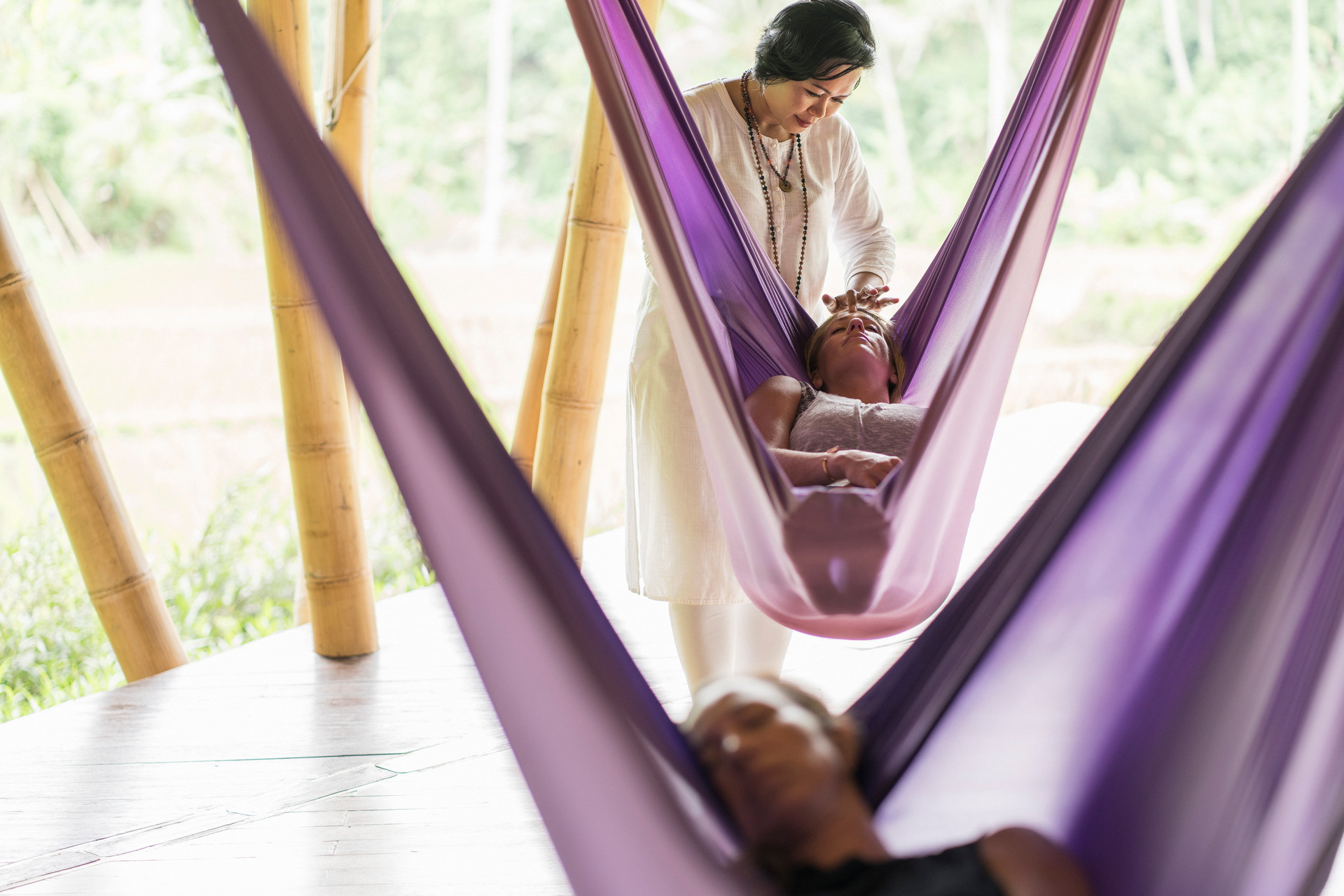
Her most beloved offering, however, is the Sacred Nap – a ritual that has quietly become synonymous with Sayan. The concept was born from memory – drawing from Balinese tradition, where mothers cradle infants in batik slings while singing lullabies, Ibu Fera reinterprets the ritual using silk aerial hammocks suspended at Dharma Shanti Bale. As guests are gently rocked, she chants mantras learned during her seven years as a nun, recounts the life of the Buddha, and layers the experience with the resonance of singing bowls.
Beyond the hammock, her sessions extend into Mala Meditation with rudraksha beads, private guidance, and bespoke wellness programmes that weave philosophy into daily ritual. And her practice continues to evolve. Inspired by the Sacred Nap, Ibu Fera is currently recording an album that layers the full story of Gautama Buddha with live sounds from the Sayan valley and crystal singing bowls.
In a destination where wellness can easily tilt toward spectacle, Ibu Fera offers something quieter: guidance, not glamour; integration, not escape.
Read the full story in epicure Indonesia April-May 2026 issue out 1 April 2026.