

How Borneo’s indigenous fermented rice wine is finding new footing in Malaysia’s modern drinking scene.
By: Eris Choo
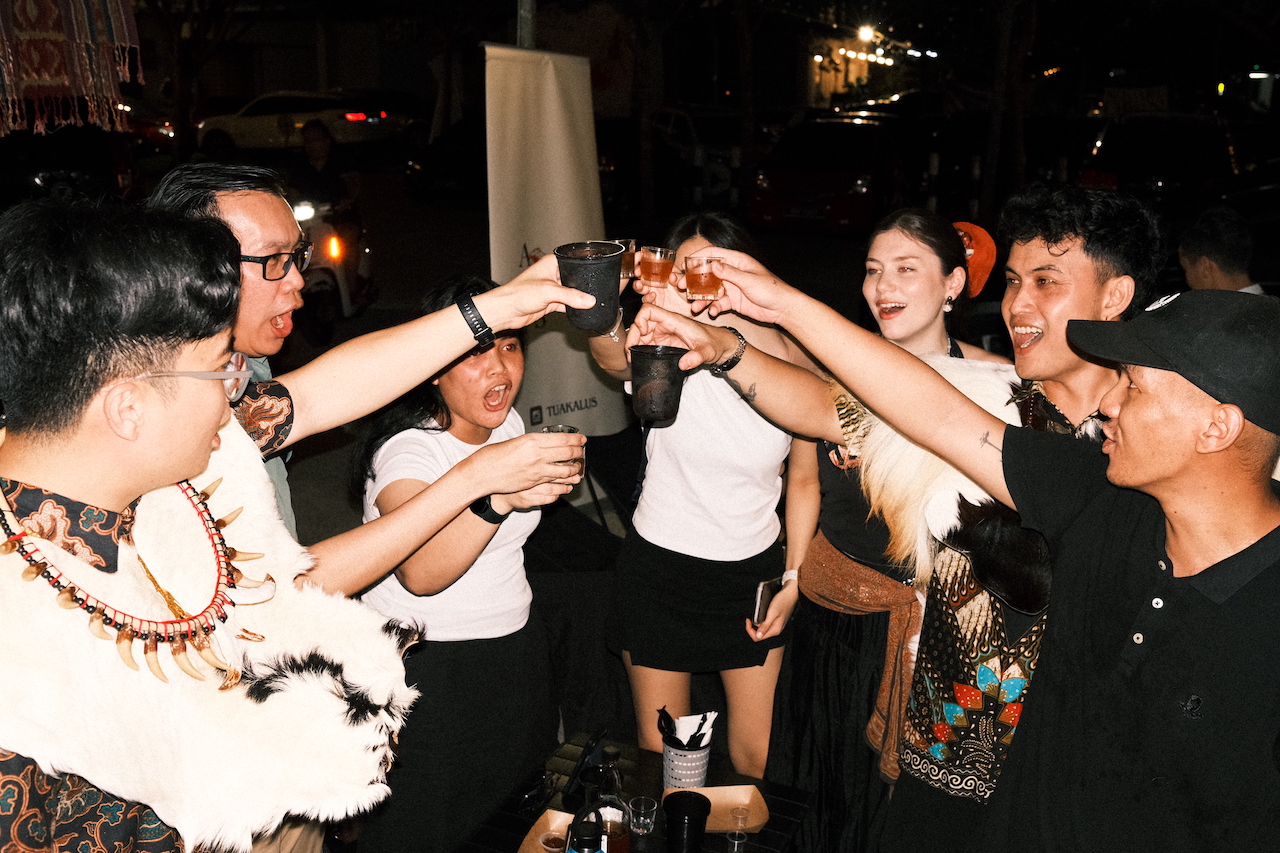
Many cultures that have grown rice have, at some point, also fermented it into drinks. The Japanese have sake; the Koreans, makgeolli. In Malaysia, on the island of Borneo, there is tuak. Typically made from glutinous rice and a starter yeast called ragi, tuak is usually milky white, pale gold, or amber in colour, ranging in flavour from dry and bold to soft and gently sweet with a lingering warmth.
Upholding Tradition, With a Twist
For Raffly Langi, who is of Iban descent, tuak was always there at festivals and family gatherings. It was not something he thought to make himself until the pandemic took his engineering job and sent him looking for what came next. He spent time learning from elders and master brewers before teaming up with another Sarawakian friend and Ipoh-native Ayden Chong to start Tuak Alus in Kuala Lumpur.
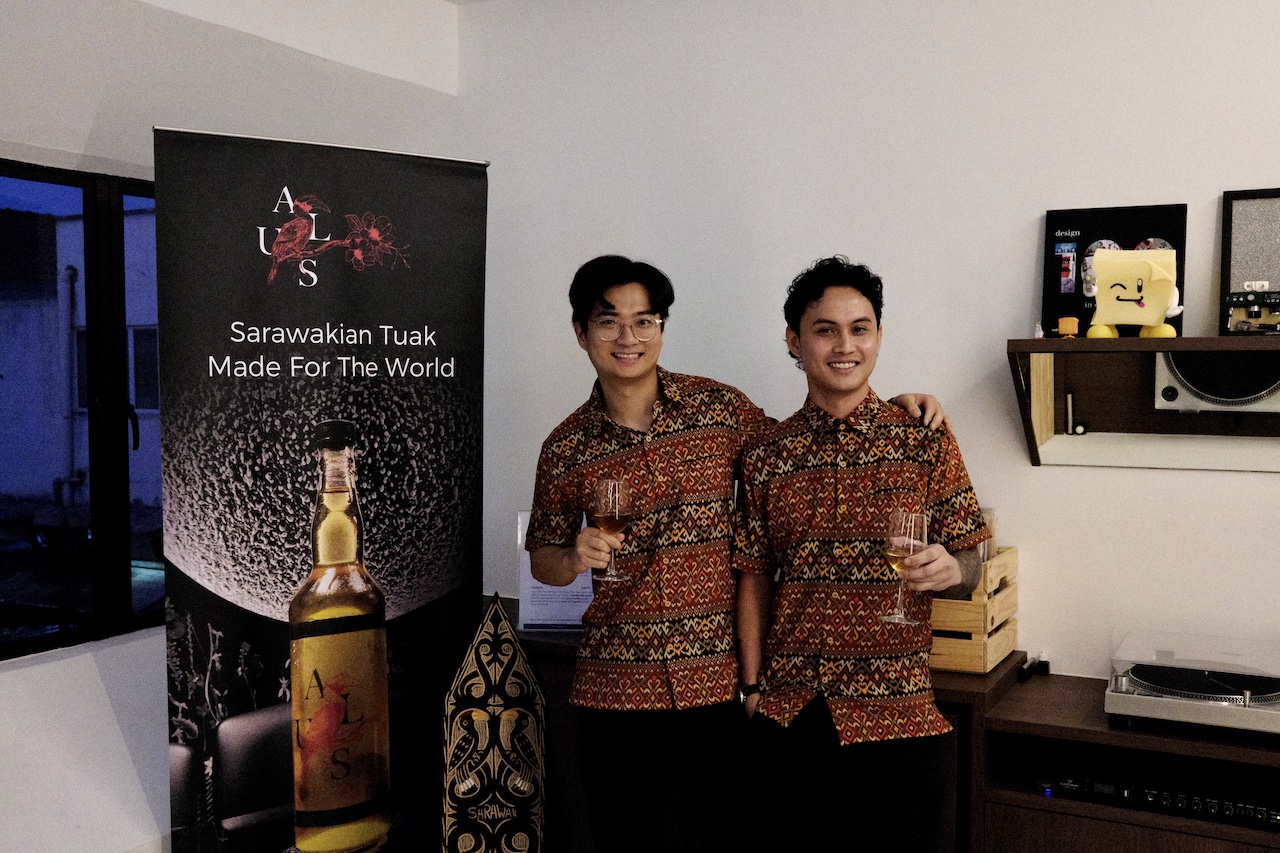
“For me, tuak is a connection to my roots,” Raffly says. “I even got my Bungai Terung tattoo before starting this, and now it feels like everything came full circle.” The Bungai Terung is a sacred tattoo marking a rite of passage for Iban young men; ‘alus’, the brand’s name, simply means ‘smooth’ in Iban.
“Traditional tuak can sometimes be strong or inconsistent, so our goal was to create something smooth without losing its identity,” Raffly explains. Ingredients are imported from Sarawak to support small, local industries.
Tuak Alus’s range covers the classics: the Tuak Laki, traditionally brewed by men, is drier and fuller-bodied, with a light whisky-like note. The Tuak Indu (named so because it was brewed by women) is softer and sweetened with gula apong, or palm sugar tapped from the nipah tree. The Pandan flavour, which is their bestseller, is fragrant and almost dessert-like. There is also a seasonal sour plum infusion, balanced with the tang of asam boi.
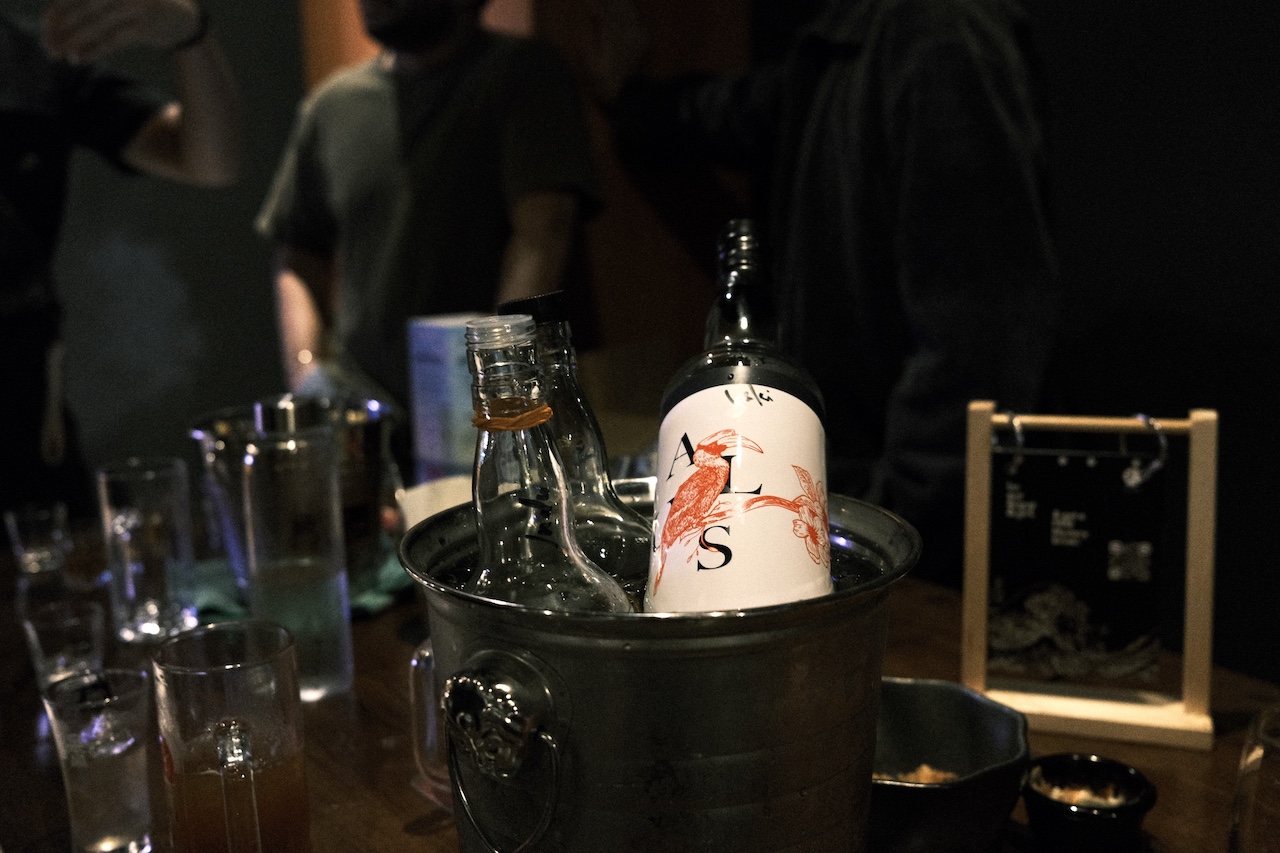
Raffly’s hope is not just to sell tuak but also tell the story behind it. “The base process, ingredients, and cultural meaning remain unchanged. But how we present it — through branding, flavours, and cocktails — that’s where we explore. It’s about making tuak relevant today, without losing where it came from,” he says.
Brimming with Potential
Shaun Chang’s entry into tuak-making stemmed from a desire to reconnect with his roots. Of Chinese and Iban descent, he had just finished his studies in accounting and finance when the pandemic brought things to a halt. He decided to learn brewing from his mother, refining the recipe based on feedback from friends and family.
The early batches were well received, but it was a chance encounter at a bar with Randy Liew, a respected master brewer, that led to a collaboration and eventually to the question that would define the brand: what if tuak could be brought onto the global stage?

The name Endu is Shaun’s mother’s nickname, (a term of endearment, while indu refers generally to women). It is an acknowledgement that tuak has historically been made by women.
Shaun wanted to push back against a perception he found limiting. “Tuak has always been looked down upon and viewed as rustic and cheap,” he says. “I decided to make it more classic, something that can be enjoyed paired with food, at high-end bars, as a lifestyle.”
Sparkling tuak was the answer. The first stage of brewing follows traditional methods, using a mix of glutinous rice and premium Bario rice from the highlands of Borneo. This is followed by secondary fermentation using a hybrid yeast strain, which introduces carbonation, the same principle behind sparkling wine.
This adds acidity and lightness, making the final product easier to drink and better suited to food pairing. “By adding carbonation, the palate opens up,” Shaun explains. “There are different textures and notes that come through.” The whole process takes around 90 days.
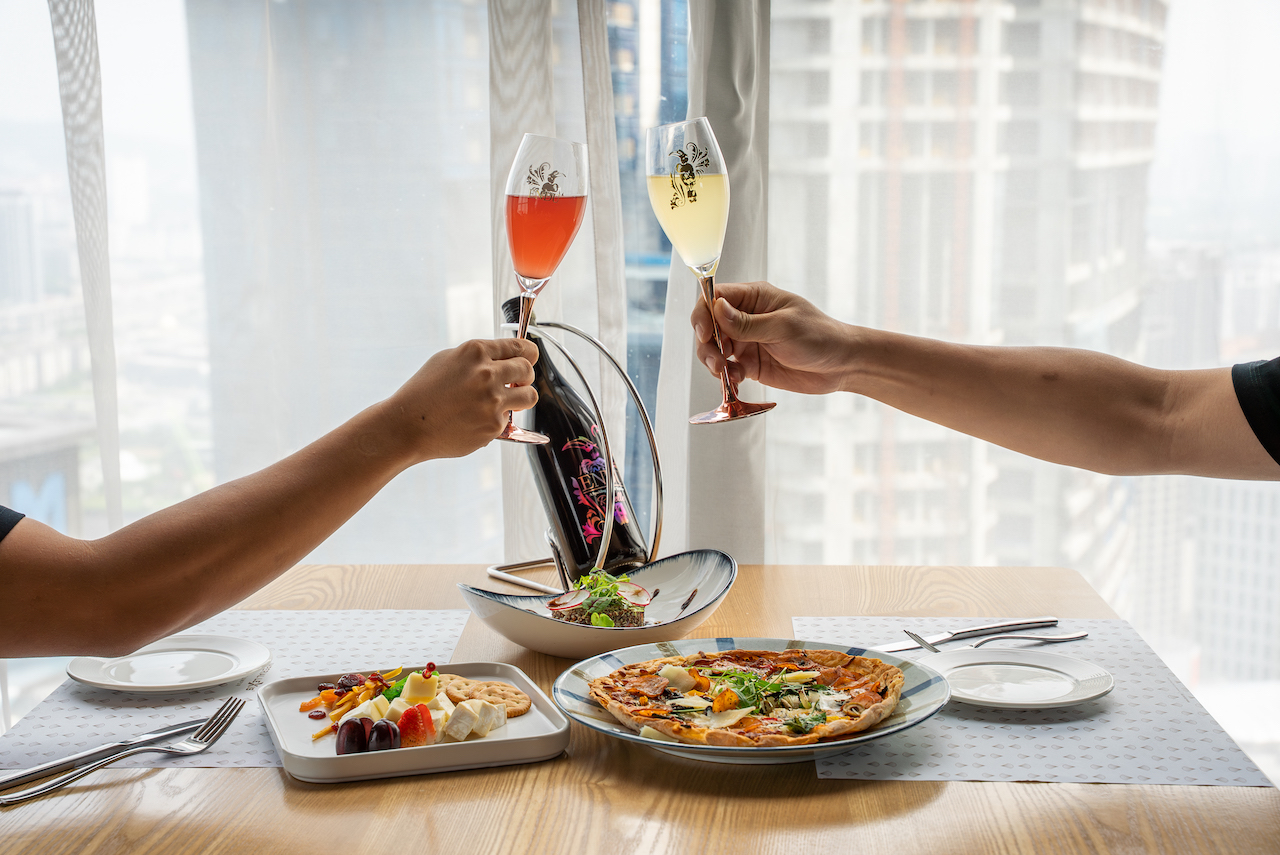
The drinks come in two flavours: the Endu Classic, best paired with white fish, grilled meat, light appetisers, and grilled vegetables; and the Endu Roselle, which is infused with organic roselle petals and works well with richer foods such as curry, cheese, and dark chocolate.
Endu is also served by the tap at select venues to address a practical concern for restaurants, as an opened bottle of sparkling loses its carbonation quickly. The tap keeps it fresh and positions it alongside craft beer and natural wine in how it is served, not just in how it tastes.
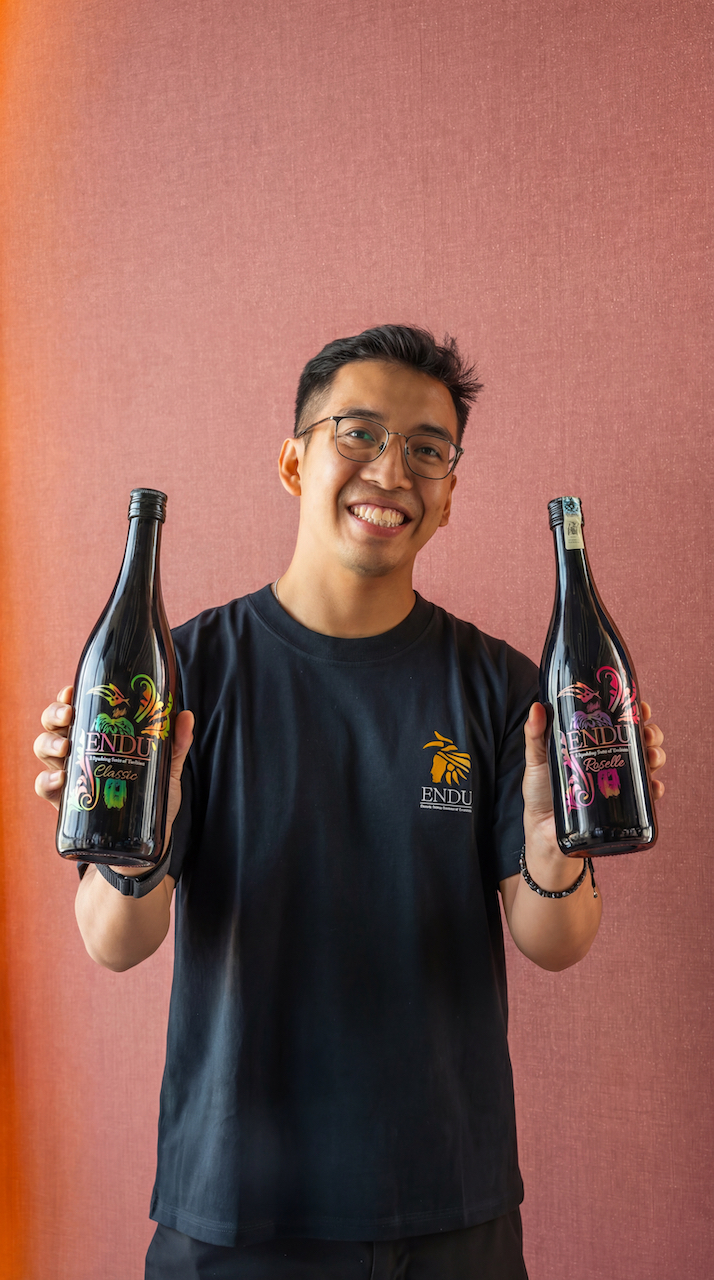
For Shaun, tuak deserves a bigger audience, and he is determined to find one. In Malaysia, it is already stocked at establishments such as two-Michelin-starred Dewakan, one-starred Chim by Chef Noom, the Michelin Selected Gen in Penang, and Asia’s 50 Best Bars listee Bar Trigona at the Four Seasons Hotel Kuala Lumpur. His sights are already set on export markets in cities like Hong Kong and Seoul, which are renowned for their fine dining scene.
Pushing Boundaries
While tuak is most associated with rice, it is important to note that the word actually refers to any fermented beverage made from fruit, vegetables, and grains.
Maynard Keyne Langet of Bad Cat Borneo posits that fruit tuak is, in fact, the older of the two. Before communities in Borneo cultivated rice, they hunted and foraged, so fermenting fruits would have come naturally. Rice, when it arrived, became so central to local belief systems that the rice variety has since become synonymous with the term. The fruit varieties, though, never went away.
Maynard, of Bidayuh heritage, spent years working in West Malaysia as a pastry chef before returning to Kuching in 2016. Watching his mother make roselle tuak was what first made him look differently at the drink he had grown up around.
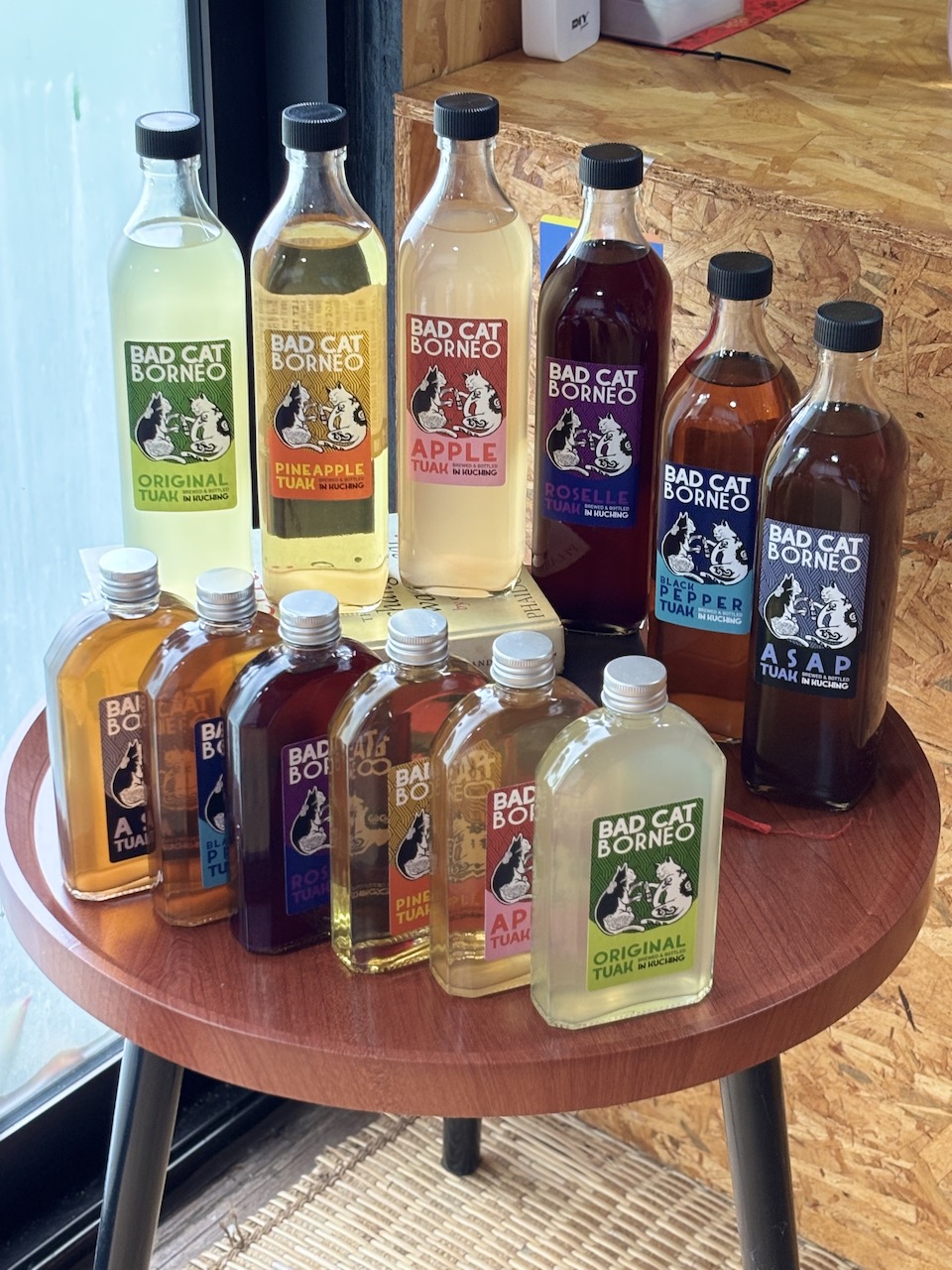
By 2018 he had gone full-time under the name Bad Cat Borneo (‘kucing’ means ‘cat’ in Malay). His roselle tuak, adapted from his family’s recipe, is a bestseller for its berry-like, lightly tart flavour. Pineapple and apple complete the fruit range, with some of the ingredients sourced from growers in his village. The pre-fermentation process usually involves cooking the fruits with the peels left on to extract the best flavours.
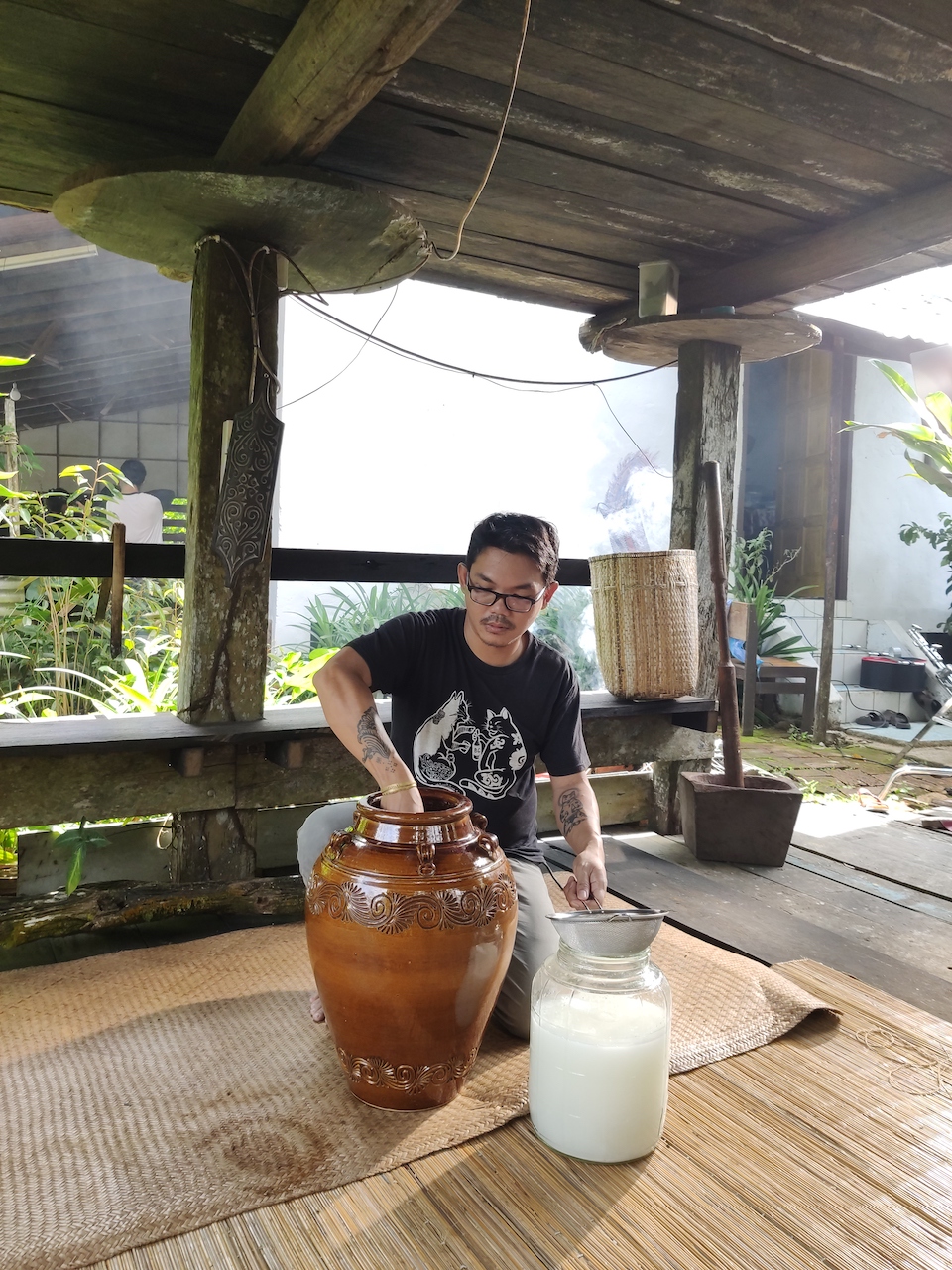
His classic rice tuak, which is made from grain grown on his family farm, remains the most popular. There is also coffee tuak, made from coffee cherries and Liberica beans.
Bad Cat Borneo’s more experimental flavours are what sets the brand apart. The Asap Tuak starts with rice that is roasted until it turns dark and smoky, inspired, he says, the way whisky develops character in aged barrels that are then smoked. The black pepper variant is made from the spice alone, with no rice base, yielding a strong and intense taste. These bold flavours each took Maynard six months to a year to research and develop, and although not his bestsellers, has a niche market.
As an independent tuak maker, Maynard handles almost everything on his own, from the brewing to distribution and marketing. He is, however, seeing good response from his retail outlet in Kuching, whilst also supplying directly to hotel and restaurant clients in West Malaysia.
What’s Next
The growing interest in tuak is not limited to what is sold by the bottle. Bartenders such as Jason Julian of Soma Cocktail Bar in Kuala Lumpur, are using it in cocktails as well.
Originally from Sabah (where you can find the counterpart of tuak, called lihing, made primarily by the Kadazandusun ethnic group), Jason realised when he moved to Peninsular Malaysia that many people outside of Borneo either did not know much about tuak, or had a misunderstanding of what it was.

“Using it in cocktails felt like the most natural way to introduce it in a format people are more familiar with,” he says. At Soma, he sources tuak indu from a local brewer, as its sweetness and smooth body integrate well into a mixed drink, paired with neutral spirits like gin, vodka, or soju.
“Tuak is not a highly standardised product, so it can vary depending on the brewer and the batch,” he notes. “That’s why we are selective with our sourcing. Consistency matters if you want it to work properly in cocktails.”
More bartenders are curious about tuak, he says, but it is still not ‘standard’. “It still sits somewhere between a novelty and a developing category. The interest is there, but it will take more exposure before it becomes more widely used.”
Tuak’s current rise comes down to timing. “In a globalised world where everyone follows the same trends, people have started to question what makes us different,” Maynard says. “For Sarawakians — and Malaysians — it is a drink that we can call our own.”
_______________
How Tuak is Made
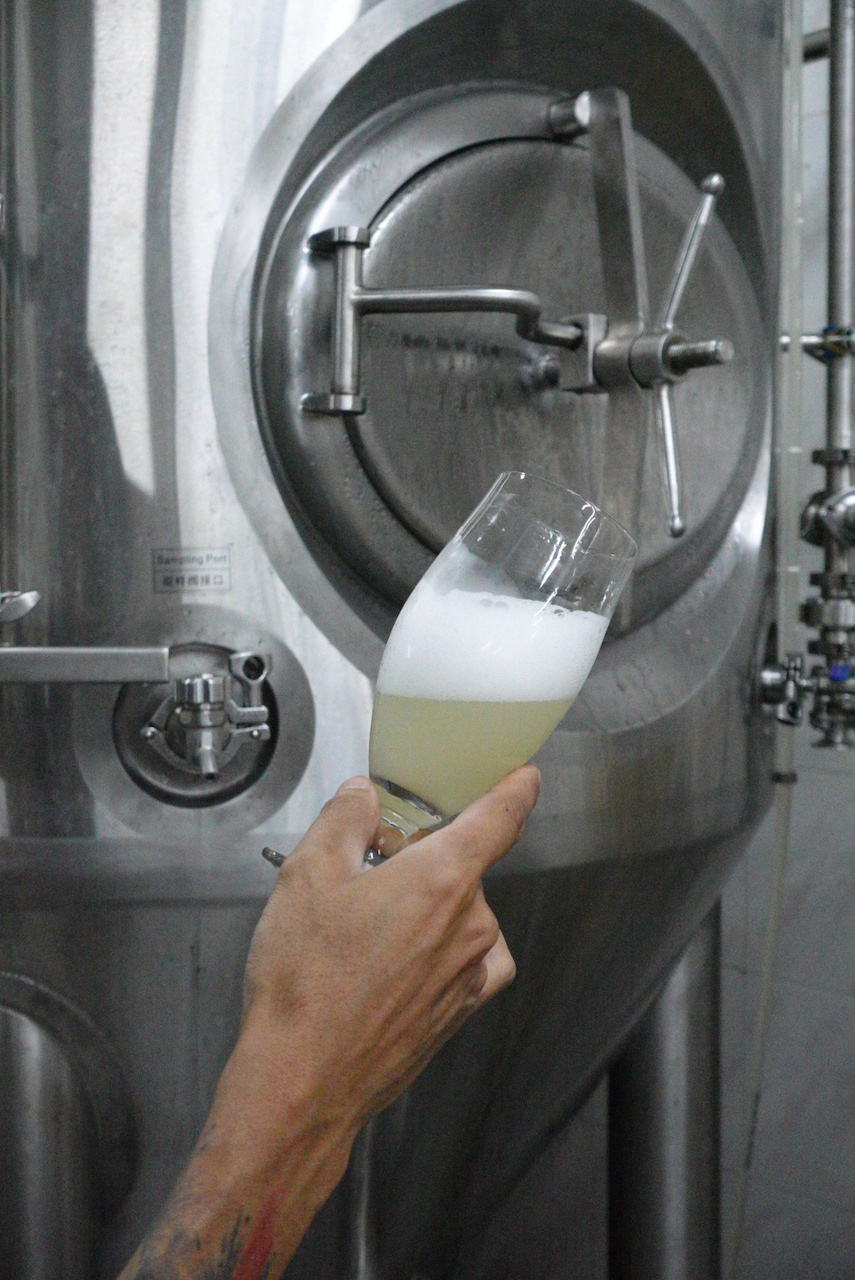
- Tuak’s fermentation process starts with ragi, a yeast cake formed by hand into small balls, dried in the sun, then ground into powder. The ragi is mixed with the base ingredient, most commonly glutinous rice that has been cooked, spread flat, and cooled.
- Once combined, the mixture goes into a fermentation vessel with water and sugar added later. It is stirred regularly and left to ferment for two to three months for rice tuak, and around two months for fruit varieties, though every maker has their own timing.
- The type of ragi produces noticeably different results, and many producers source theirs from a single trusted supplier or make it themselves for better control.
- Shelf life varies considerably. Rice tuak can be aged almost indefinitely, darkening to near black over time; some families keep bottles for decades. However, aged tuak does not necessarily mean it tastes better, as it is highly dependent on how it was brewed and stored. Fruit tuak is best consumed within two to three years, after which the flavour turns flat and dry.