

For years, family travel in Southeast Asia meant well-lit resort pools, back-to-back scheduled activities, and experiences designed to eliminate every rough edge. That approach still exists – but a growing number of families are choosing something harder to package and far more difficult to forget.
Across the region, parents and children are trading predictability for immersion: hiking muddy jungle trails, sleeping on floating raft houses, snorkelling straight off the beach at dawn. The destinations below are not extreme expeditions. They are places where nature still operates on its own terms – and where children learn to observe, wait, and pay attention in ways that no structured itinerary can teach.
One principle connects all seven: no staged wildlife encounters. No feeding sessions, no performance, no guarantees. The most meaningful wildlife moments are almost always the ones you cannot control – and for children especially, that shift from expectation to respect matters enormously.
Bukit Lawang, North Sumatra – the forest that teaches patience
At the edge of Gunung Leuser National Park, Bukit Lawang doesn’t announce itself. Roads narrow gradually as palm plantations thin into denser canopy. The air shifts – warmer and heavier, carrying damp earth and river water. By the time families reach the village, the forest has already started to change the pace.
Most accommodation here sits along the Bohorok River, connected by suspension bridges and footpaths rather than resort corridors. There are no polished promenades. The forest is the attraction.
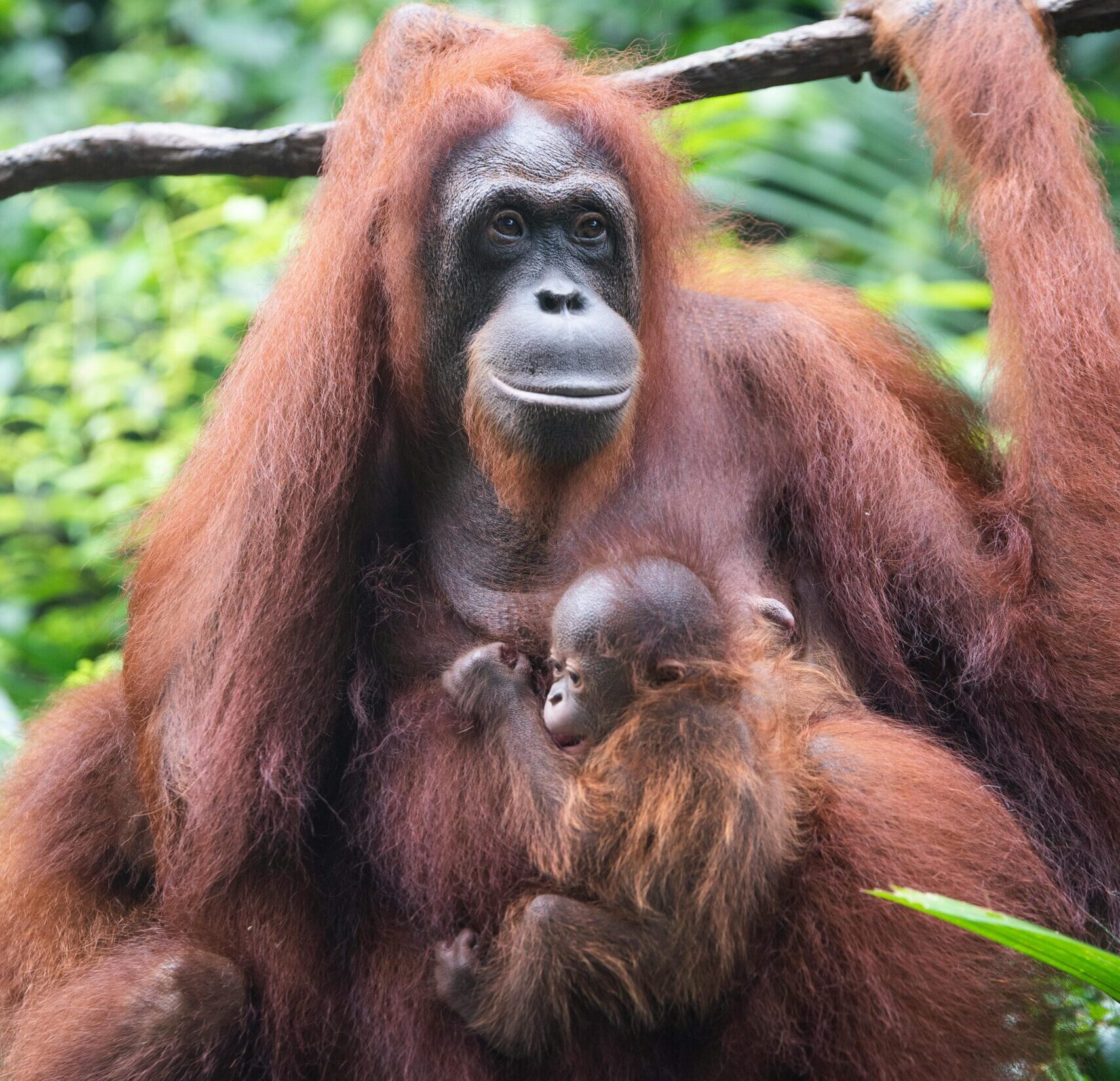
Orangutan trekking is Bukit Lawang’s centrepiece, but sightings are never guaranteed. Guides move slowly, scanning the canopy for movement or broken branches overhead. For children accustomed to on-demand entertainment, that waiting becomes genuinely transformative. And then – suddenly – an orangutan appears high above, moving with surprising speed despite its size. Thomas’s leaf monkeys flash between nearby branches; long-tailed macaques keep closer to the forest edge.
Beyond wildlife, the days here are simple and physical. Families float down the Bohorok on rubber inner tubes, swim in calmer village sections, and spend evenings listening to insects from open-air terraces.
Best for: Families with children who can walk comfortably in heat and humidity.
Key wildlife: Orangutans, Thomas’s leaf monkeys, macaques, hornbills.
Note: Trails are often muddy. Leeches appear during wetter months. Accommodation is atmospheric rather than luxurious.
Khao Sok National Park, Thailand – where water and wilderness converge
Southern Thailand’s Khao Sok is one of the most quietly spectacular stops in any family travel itinerary in Southeast Asia. Longtail boats cut across Cheow Lan Lake in the early morning, mist sitting low across the surface, limestone cliffs rising almost vertically from the water. The setting feels cinematic before the day has properly begun.
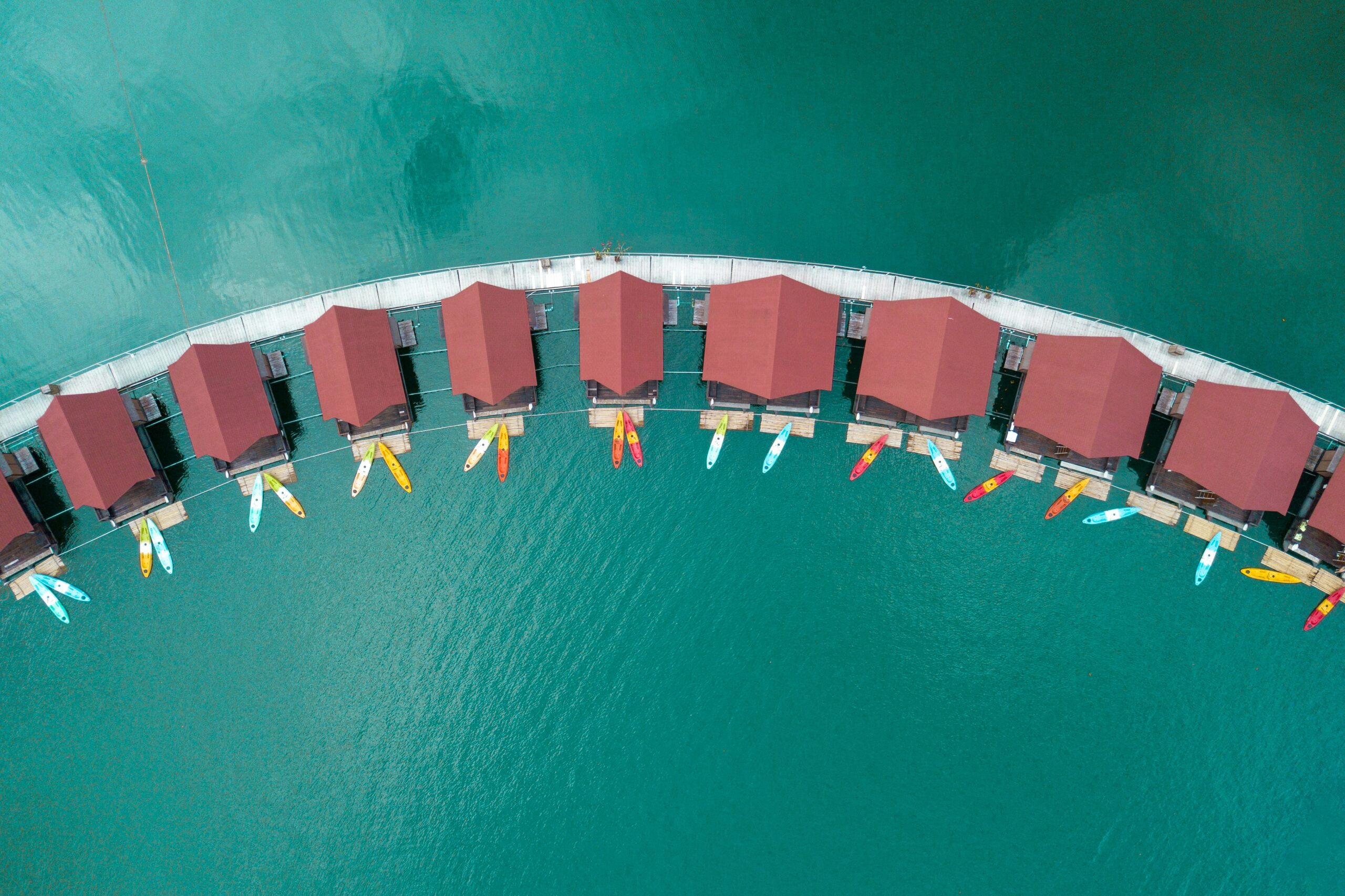
Families typically stay in floating raft houses directly on the lake – simple wooden structures connected by walkways, surrounded entirely by rainforest. Children swim constantly here, jumping from the deck into warm freshwater, kayaking between raft houses, moving between water and jungle with very little structure and a great deal of freedom.
Just before 6am, gibbons begin calling from the hillsides. The sound carries across the lake in long, rising sequences that echo between the cliffs. Hornbills cross overhead as the sun clears the ridge, their wingbeats audible before the birds come into view. Dusky langurs move through shoreline trees, occasionally pausing to watch passing boats below.
Khao Sok works because it removes the boundary between accommodation and environment. You don’t visit the wilderness. You sleep inside it.
Best for: Families looking for a softer introduction to rainforest travel.
Key wildlife: Gibbons, hornbills, dusky langurs, macaques.
Note: Floating raft house accommodation is simple but genuinely memorable. Dry season offers calmer lake conditions.
Koh Tao, Thailand – the ocean made intimate
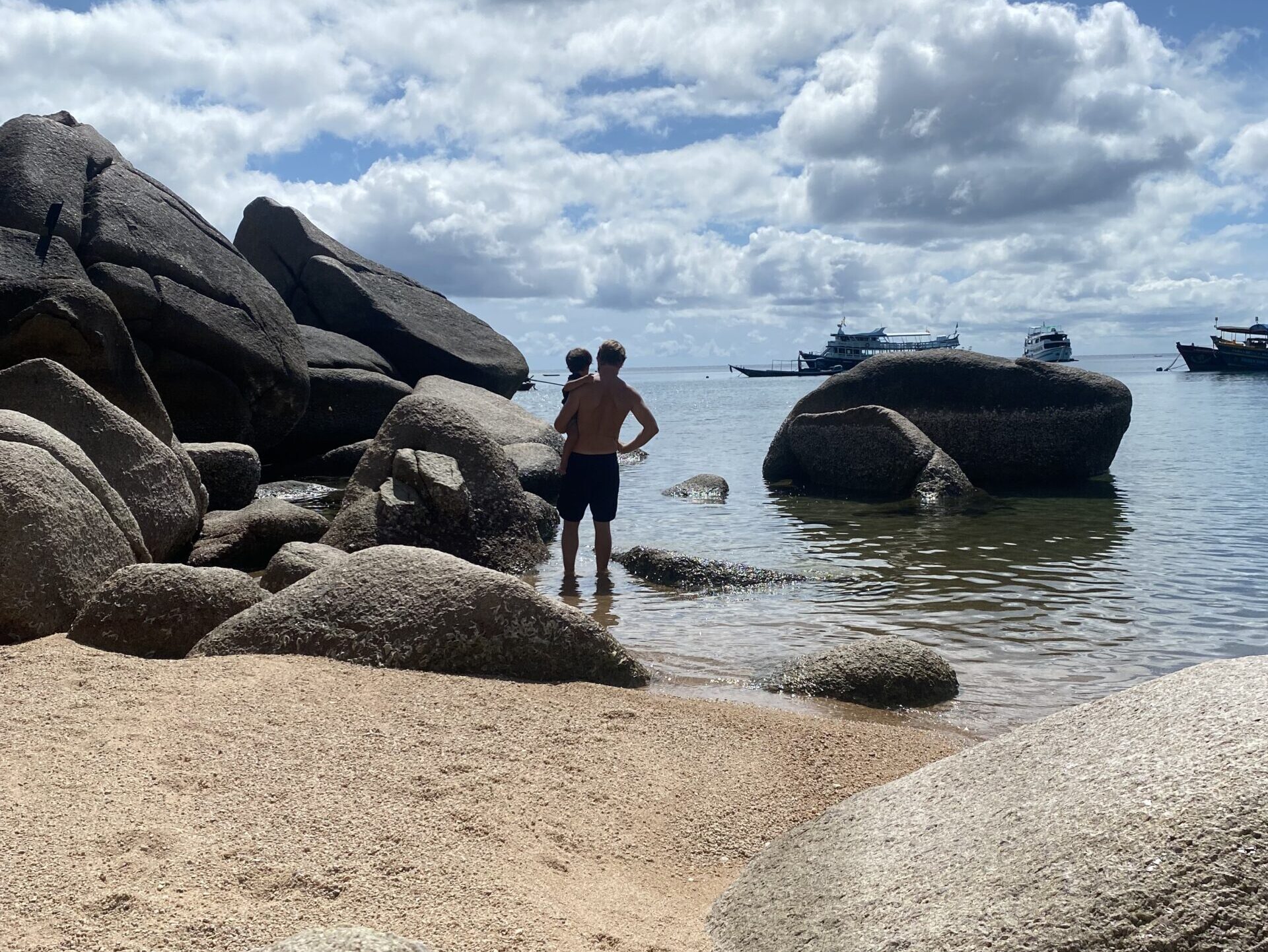
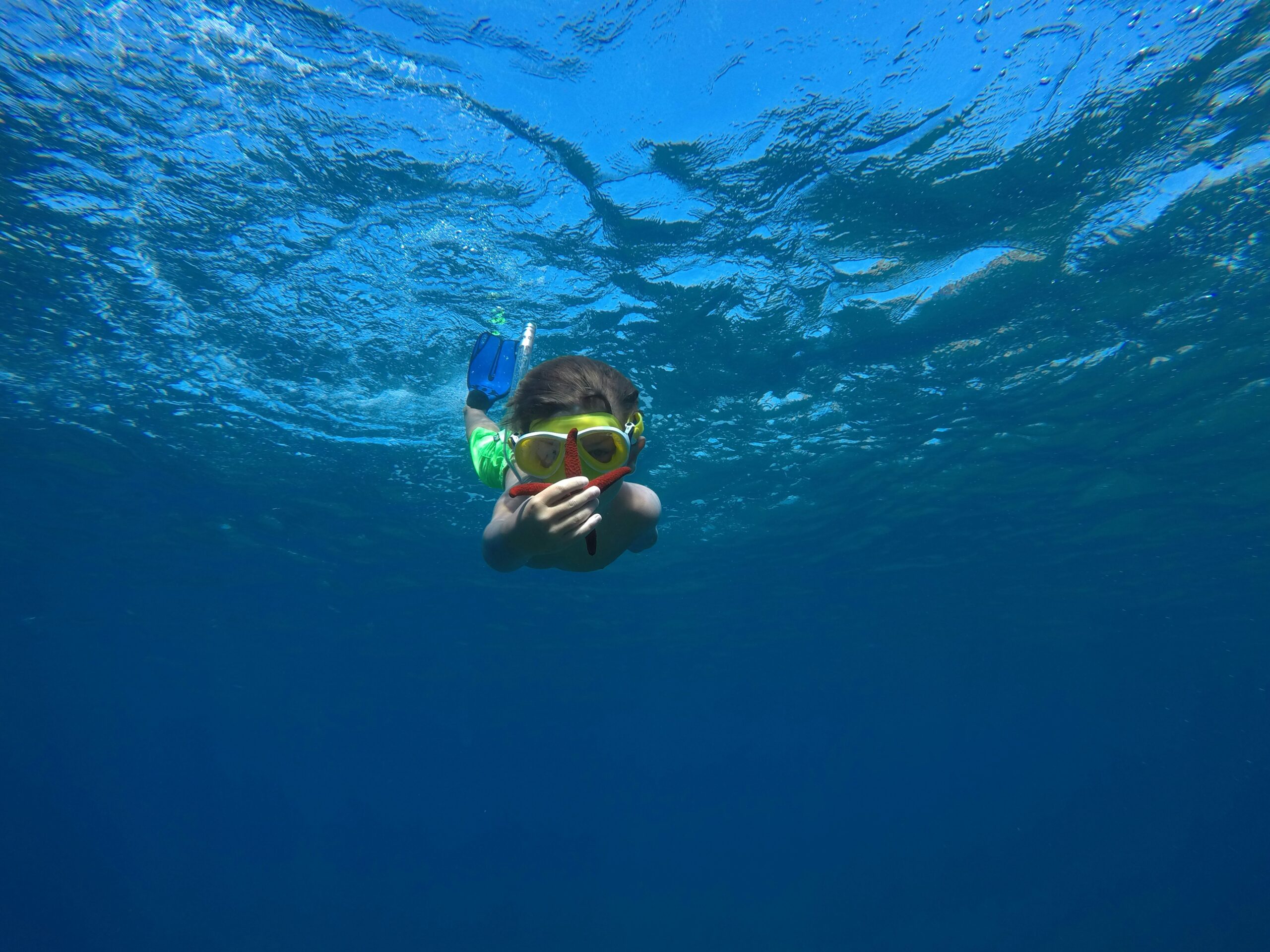
For families introducing children to snorkelling or diving, Koh Tao remains one of Southeast Asia’s most accessible starting points. Unlike destinations where reefs require long boat rides or challenging conditions, much of Koh Tao’s marine life sits remarkably close to shore. In several bays, children can wade in from the beach and begin spotting fish immediately.
The island is smaller and slower than neighbouring Koh Samui, which gives it a more manageable rhythm for families with younger children.
Shallow reefs at Shark Bay, Ao Leuk, and Tanote Bay allow children to build confidence gradually in excellent visibility. Early mornings at Shark Bay are when blacktip reef sharks are most active – small groups moving along the sandy edge before the water fills with other swimmers. By late morning, sea turtles graze slowly across seagrass beds, surfacing for air before dropping back down. Blue-spotted stingrays rest half-buried in sunlit patches of sand, lifting off in a sudden glide when approached too closely.
Best for: Families comfortable spending long days outdoors and in the water.
Key wildlife: Blacktip reef sharks, sea turtles, parrotfish, butterflyfish, blue-spotted stingrays.
Note: Roads can be steep and uneven in parts. Diving schools offer junior discovery programmes for older children.
Bacuit Archipelago, Palawan – where geography becomes adventure

The Bacuit Archipelago, off El Nido in Palawan, makes an impression immediately. Towering limestone cliffs rise from turquoise water. Hidden lagoons sit behind narrow rock openings. Small beaches appear and vanish with the tides.
Most families explore by traditional banca boat, departing each morning for active, full-day island excursions. Children kayak into enclosed lagoons, swim through narrow rock channels, and snorkel above coral gardens where reef fish move in dense, shifting schools. In clearer conditions, rays and reef sharks appear in deeper water beyond the shallows.
The surrounding islands remain extraordinary despite the rapid development of El Nido town itself – and the contrast between built-up shoreline and untouched archipelago is, in its own way, a useful thing for children to witness.
Best for: Active families comfortable with full-day boat trips and repeated water entry.
Key wildlife: Reef fish, rays, reef sharks, sea turtles.
Note: Conditions can be rough during monsoon season. Strong sun exposure throughout the day is the norm.
Taman Negara, Malaysia – the structure of the wild
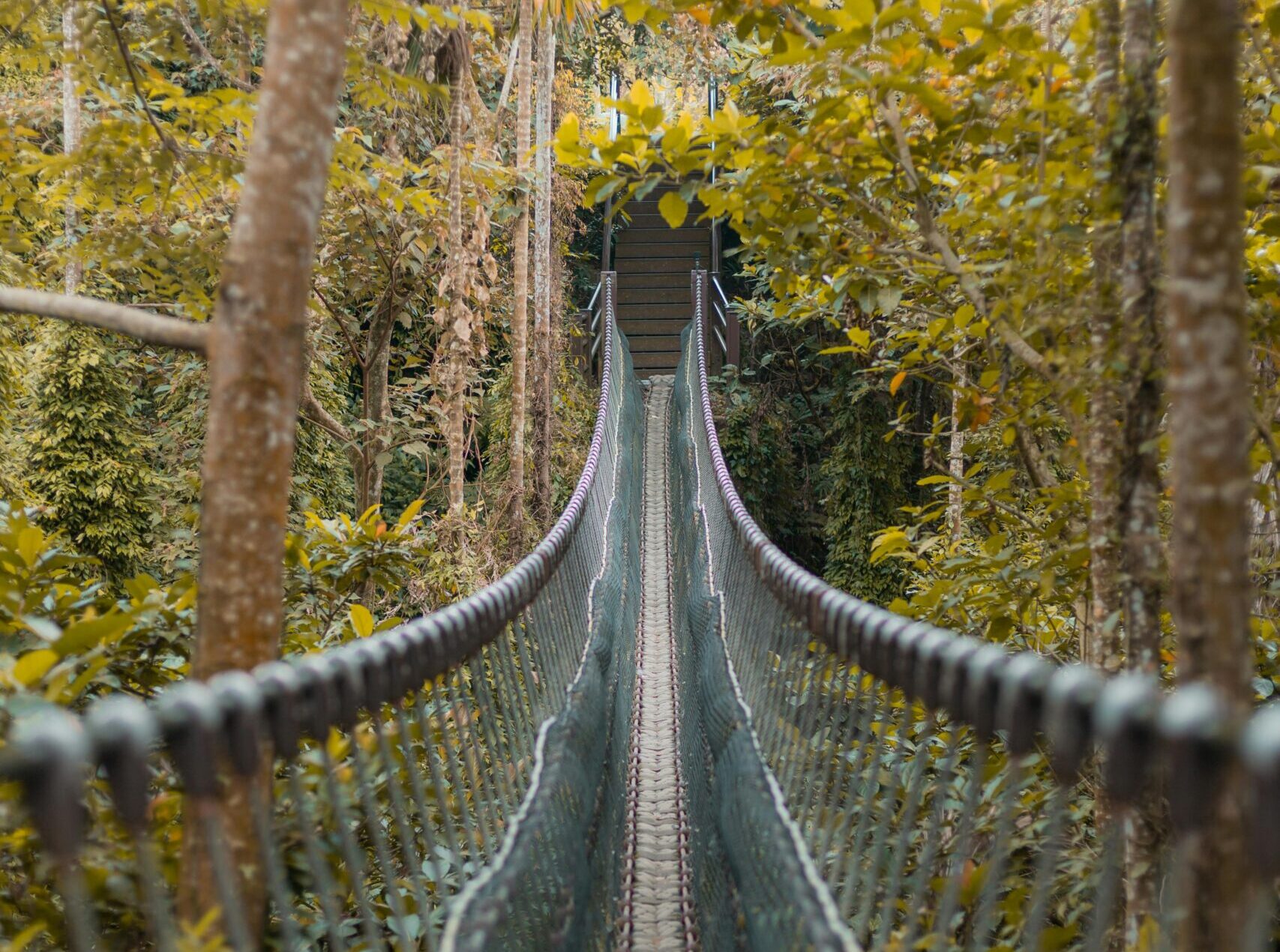
Taman Negara is one of the world’s oldest rainforests, and it announces that age without ceremony. The journey in by river boat already slows families down. Dense forest closes in on both sides of the muddy water; villages and roads fall away behind.
The canopy walkways are a highlight – suspended high above the forest floor, they give children a genuine sense of how rainforest life operates in vertical layers rather than a single flat plane. Silvered langurs and macaques appear near the riverbanks; hornbills and other large birdlife move through the upper canopy. After dark, stick insects, frogs, and nocturnal creatures emerge along the trails.
Taman Negara teaches something increasingly difficult to find in structured travel: how to pay attention slowly.
Best for: Families interested in nature observation over resort comfort.
Key wildlife: Langurs, macaques, hornbills, nocturnal insects.
Note: Heat and humidity are constant. Night walks reveal an entirely different side of the forest.
Cát Tiên National Park, Vietnam – space to explore
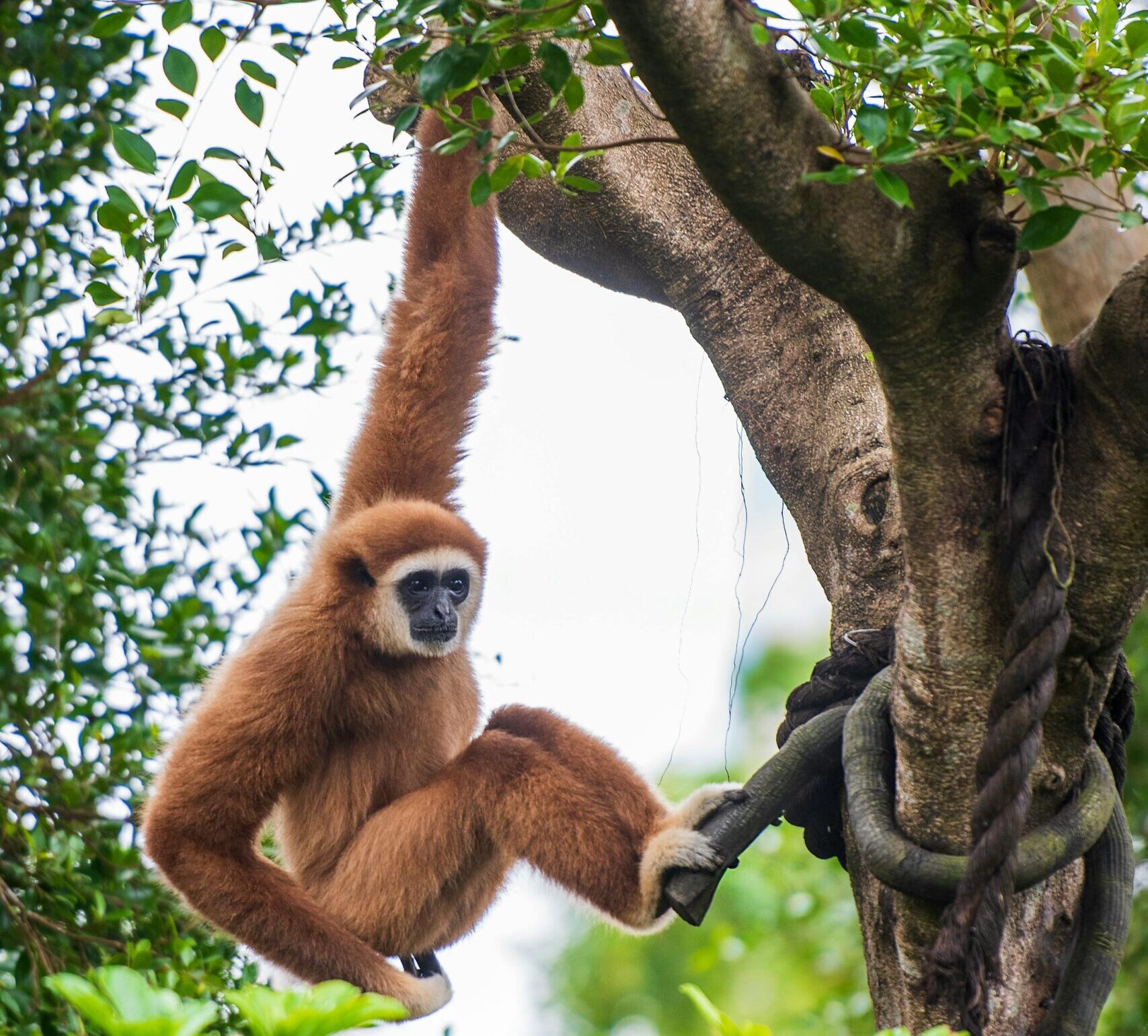
Compared to the density of Sumatra or Borneo, Cát Tiên in southern Vietnam feels unexpectedly open. The canopy breaks more frequently, letting light filter through. Trails are wider. Distances feel less compressed. Children move with more independence here, and many spend much of the day on bicycles.
Gibbons call at dawn, their voices carrying clearly across the forest. Deer graze in open grassland sections; crocodiles rest near Crocodile Lake in the afternoon heat. Birdlife is consistently strong throughout the park – kingfishers and hornbills are frequently spotted, even on shorter walks.
Cát Tiên strikes a good balance for families new to wildlife travel: genuinely wild, but more approachable in scale than the deep Bornean jungle.
Best for: Families looking for an accessible, unhurried rainforest experience.
Key wildlife: Gibbons, deer, crocodiles, kingfishers, hornbills.
Note: Early mornings offer the best wildlife activity. Infrastructure is simpler than major tourist destinations.
Danum Valley, Malaysian Borneo – the final wilderness
Danum Valley is where the idea of family travel in Southeast Asia reaches its most demanding — and most rewarding — expression. This is primary rainforest: ancient, biologically dense, and remarkably intact. The moment families enter the forest, the difference from managed parks is immediately apparent.
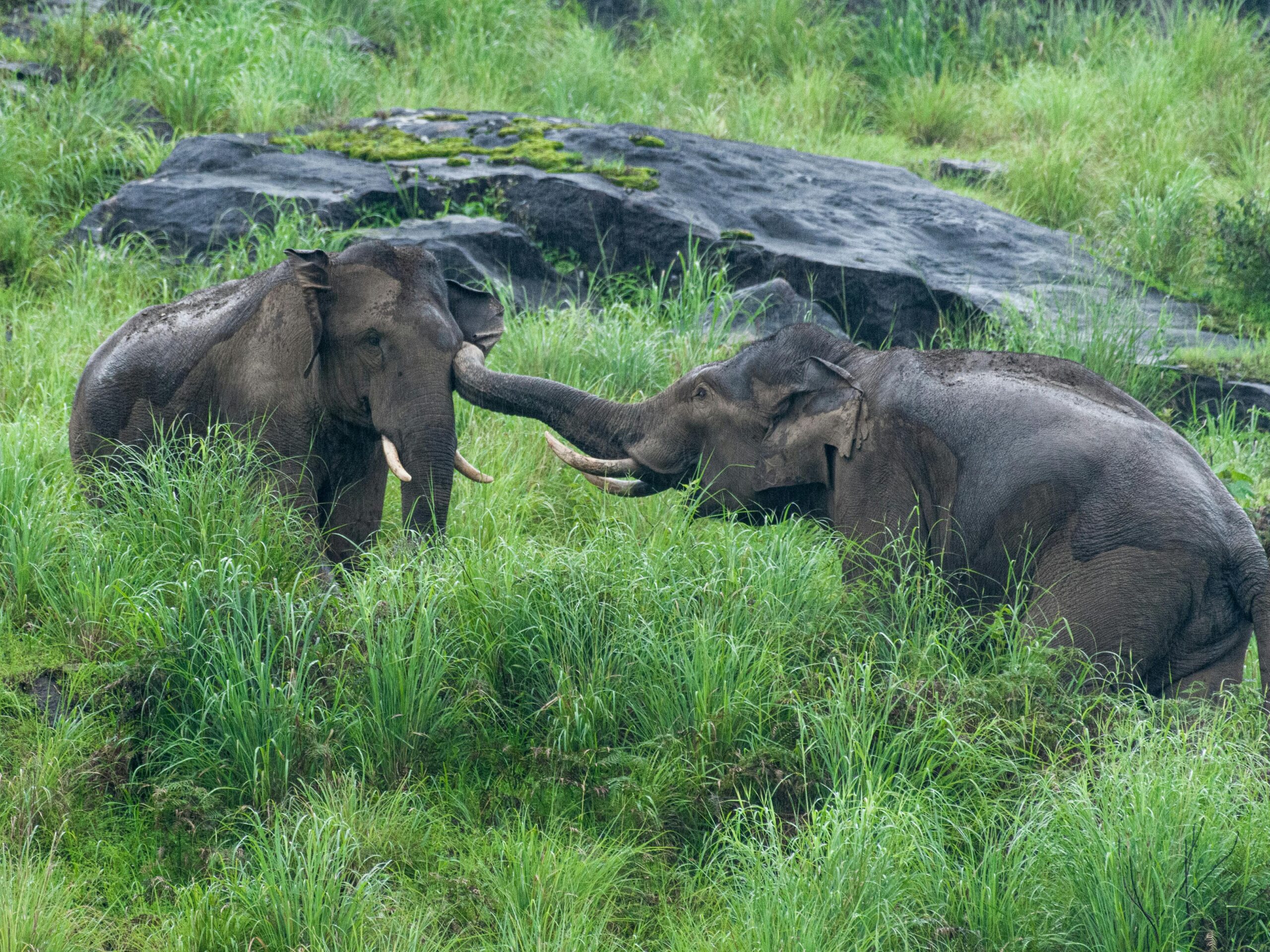
Wildlife here is present but never predictable. Orangutans move through the upper canopy, usually heard before they are spotted. Bornean pygmy elephants occasionally pass through the forest corridors below. Clouded leopards live in the valley too, though sightings are rare and never promised.
After dark, guided night drives reveal a different layer entirely: civets, slow lorises, flying squirrels, and a richness of insects and frogs that feels almost hallucinatory in its variety. Danum Valley offers something genuinely scarce in the region today — a rainforest that remains entirely in control of itself.
Best for: Families with older children or a strong existing interest in wildlife.
Key wildlife: Orangutans, hornbills, nocturnal wildlife.
Note: High humidity, remote location, and dense terrain. Rain is frequent. Accommodation focuses on conservation immersion rather than resort amenity.
Why the best family trips are rarely the easiest
A pattern emerges across all seven of these destinations. Children who spend time in genuinely immersive outdoor environments tend to become more physically confident. Attention spans lengthen without screens competing for them. Curiosity replaces routine in a way that structured resort holidays rarely achieve.
These trips are not seamless. Children get wet. Trails turn muddy. Boats run late. Wildlife does not appear on cue. But those imperfections are frequently what families remember most clearly – and what children carry home long after the trip ends.
The most valuable thing a family can bring back from travel in Southeast Asia is not a photograph. It is a sharper sense of curiosity, a quieter kind of resilience, and a recognition that the natural world is worth observing carefully.
Across the region, places that still offer that experience do exist. You simply have to be willing to travel a little further to find them.
Planning a family trip to Southeast Asia? Explore more destination guides on epicureasia.com.