

In Bali, hospitality is increasingly shaped by regenerative practices, as a growing generation of resorts and local producers rethink how tourism can exist in closer harmony with the island’s ecology. On an island where ritual guides daily life and nature is deeply embedded in spiritual philosophy, sustainability carries particular resonance. From regenerative resorts and circular waste systems to locally sourced mineral water, these initiatives demonstrate how design, business, and environmental stewardship can evolve together – allowing mindful hospitality to take root across the island.
Waterbom Bali: Engineering Sustainability

Few attractions approach sustainability with the same level of precision as Waterbom Bali. Where many tourism businesses speak in broad promises, the park measures impact with scientific clarity – tracking energy, water, and waste down to the smallest metric.
In 2024, the waterpark reached a major milestone: 100 percent renewable electricity, achieved through PLN Renewable Energy Certificates alongside on-site solar installations. Its solar capacity now produces more than 180,000 kWh annually, offsetting over 160 tonnes of carbon emissions each year. Water management is equally meticulous. Groundwater use has been reduced by 14 percent since 2019, while an upgraded sewage treatment system recycles thousands of cubic metres of wastewater to irrigate the park’s gardens. Rainwater capture systems further support this closed-loop approach.
Yet the philosophy extends beyond infrastructure. For CEO Sayan Gulino, sustainability is embedded into the organisation’s identity. “For us, regenerative tourism really means taking responsibility for the resources we depend on and making sure we contribute positively to Bali over time. Water is obviously central for a waterpark, so our water conservation starts with how we manage it, reducing groundwater use, recycling wastewater through our on-site treatment system, and reusing it for irrigation across the park’s gardens, as well as harvesting rainwater and improving efficiency across all systems.” he explains.
The park’s ambitions stretch further still. Waterbom has become the first tourism business in Indonesia with approved Science Based Targets initiative (SBTi) emissions targets, aiming for a 90 percent reduction in emissions by 2033. Solar expansion, electric kitchen systems, and low-energy infrastructure upgrades form part of the roadmap.
Equally important is the human element. With 89 percent of its workforce native Balinese, the park’s environmental decisions are shaped by people whose relationship to land and water is deeply personal. “For many of our staff, the connection to land, water, and community is personal, so these issues aren’t abstract, it’s part of their daily life,” Gulino says. “That perspective influences how we operate and how seriously these responsibilities are taken.”
In a destination often grappling with the pressures of tourism growth, Waterbom Bali offers a model of measurable accountability.
Raffles Bali: Architecture That Follows the Land
Arriving at Raffles Bali feels less like entering a resort than stepping into an ecosystem carefully preserved. The property took nearly a decade to complete – a deliberate pace that allowed the design to follow the contours of the land rather than reshape it. No trees were removed during construction, and today around 80 percent of the vegetation across the estate consists of native species.
The landscape, envisioned by the late Made Wijaya, forms an essential part of the resort’s environmental philosophy. A former dry riverbed has been restored into a functional waterway that captures rainwater and supports irrigation across the grounds. Architecture, too, remains restrained. No structure rises above 15 metres, ensuring the buildings sit quietly within the surrounding greenery.
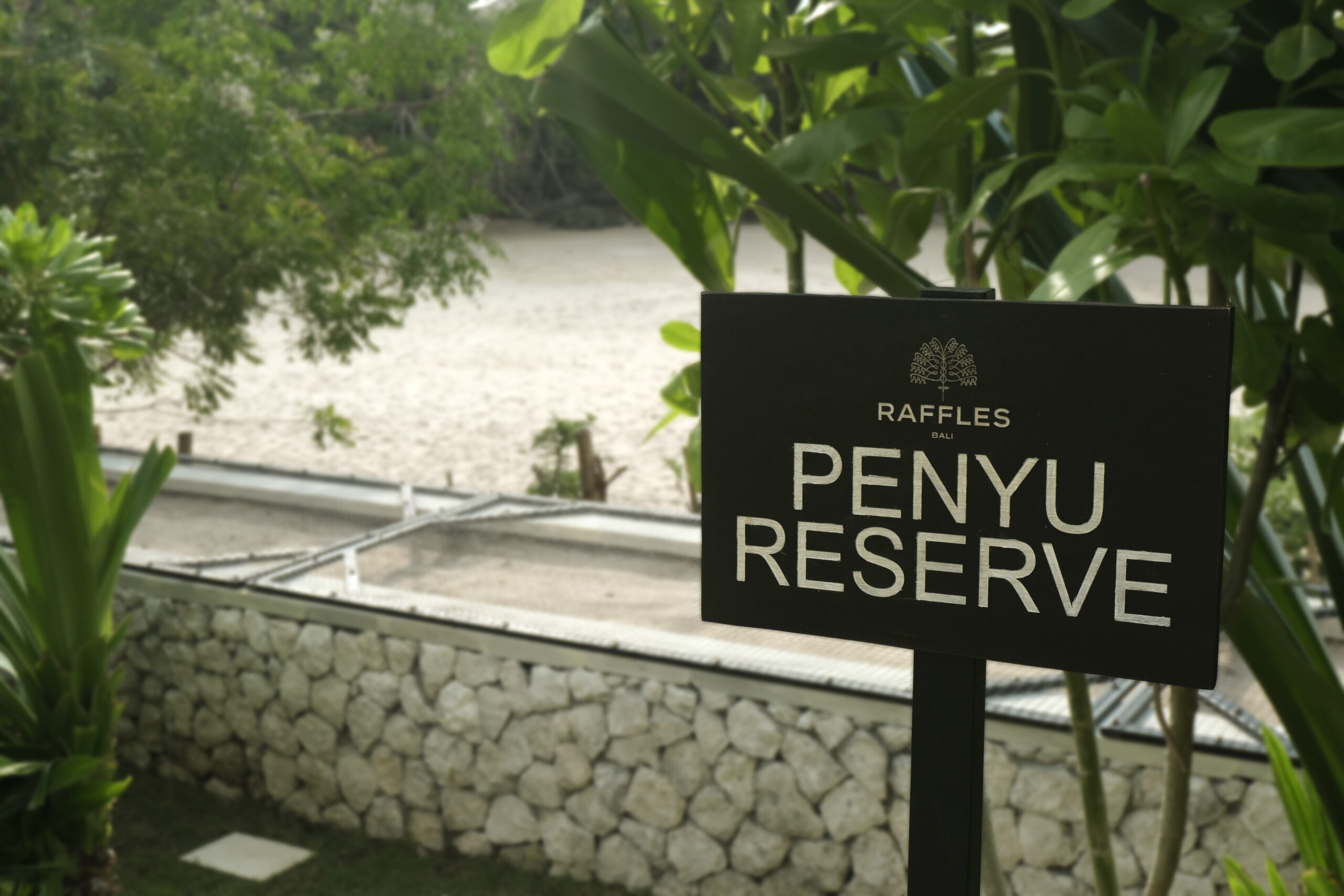
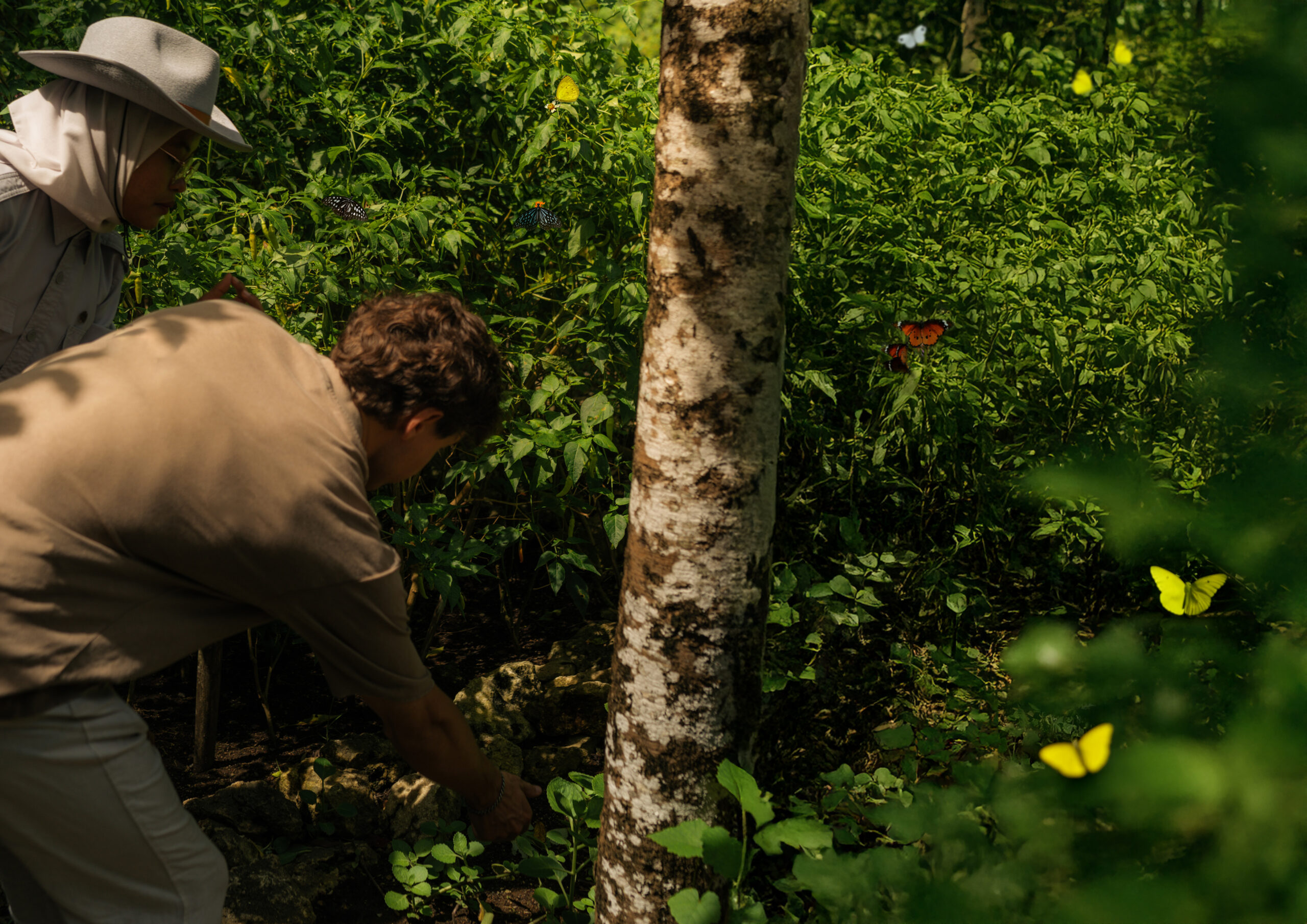
Sustainability is also woven into the guest experience. Botanical tours introduce more than 100 plant species growing across the estate, while bird and butterfly walks reveal the biodiversity thriving within the landscape. Perhaps the most touching initiative is The Penyu Reserve, created after staff discovered sea turtles nesting along the resort’s beachfront. Eggs are protected until hatching, and guests are invited to witness the hatchlings’ first journey to the ocean.
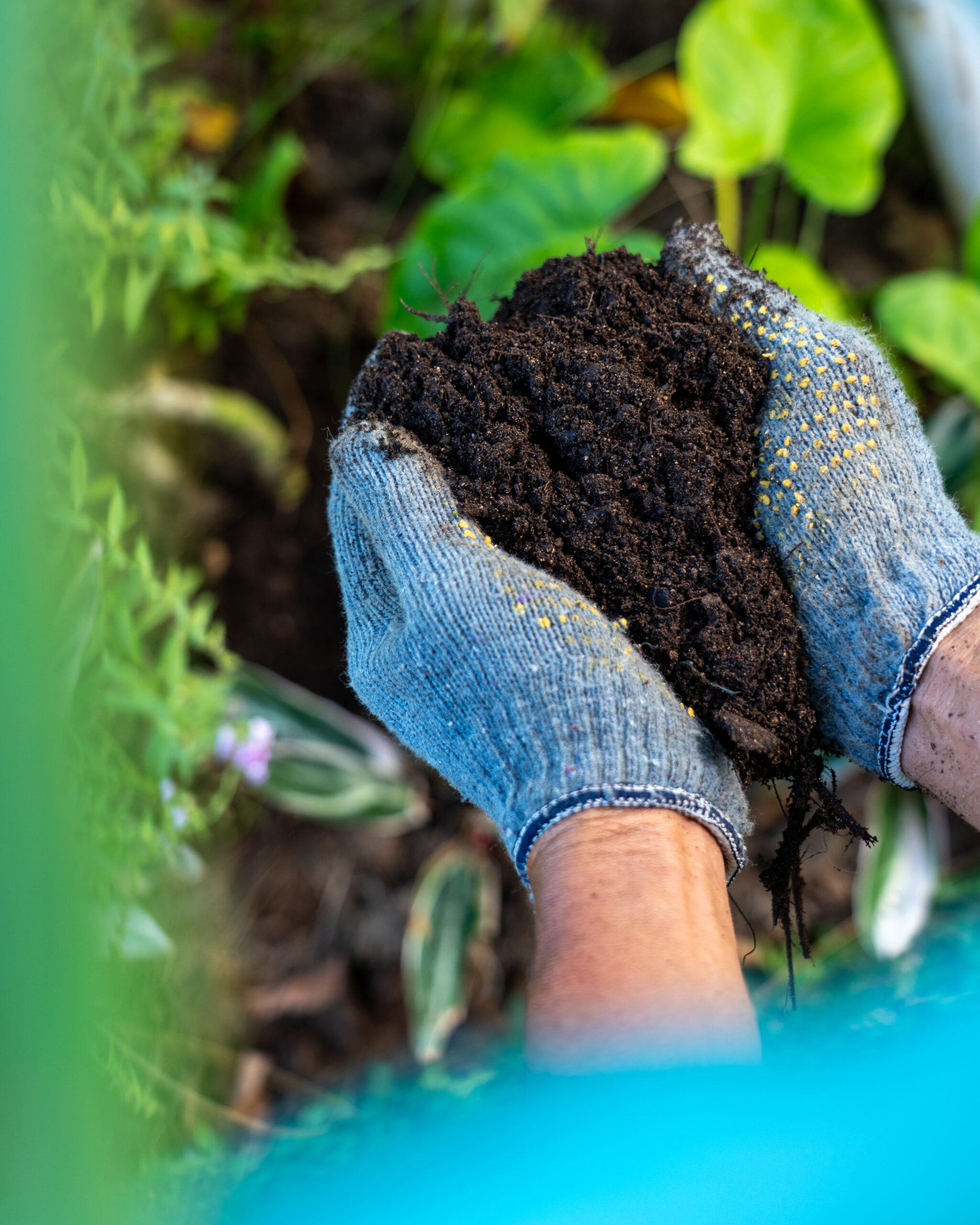
Elsewhere, a working farm garden supplies produce to the resort kitchens, compost returns nutrients to the soil, and water recycling systems sustain the gardens. Restaurants follow an 80/20 sourcing philosophy, prioritising ingredients from local producers.
At Raffles Bali, sustainability presents itself as the natural order of things.
Alila Villas Uluwatu: Responsible Luxury on the Cliffs
High above the Indian Ocean, Alila Villas Uluwatu is widely admired for its striking architecture. Designed by Singapore-based firm WOHA, the resort’s open pavilions and limestone structures respond naturally to wind, heat, and horizon. Yet beneath its sculptural elegance lies one of Bali’s most advanced sustainability systems.
The resort was the first in Indonesia to achieve EarthCheck’s highest certification, reflecting rigorous environmental performance. Rainwater harvesting, grey-water recycling, and efficient irrigation systems are integrated directly into the property’s design.
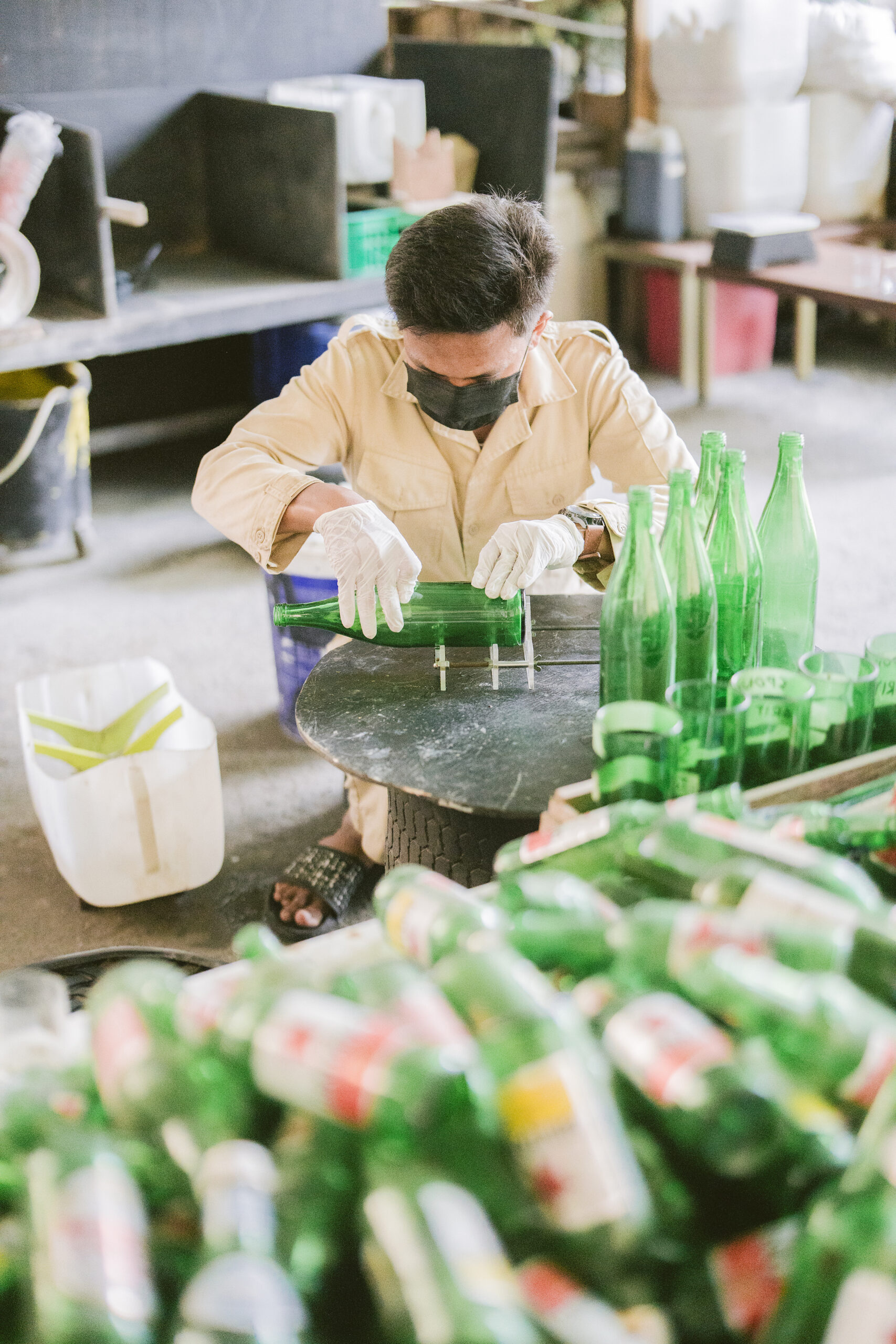
In 2019, the resort expanded its environmental programme with the creation of the Sustainability Lab, a visible facility where waste is transformed into new materials. Glass bottles are reshaped into drinking vessels, broken ceramics become mosaic tiles, and organic waste is composted or processed through Black Soldier Fly bioconversion.
Plastic has been nearly eliminated, replaced with refillable ceramic amenities and an on-site water bottling facility that reduces transportation emissions. The surrounding landscape is cultivated with equal care. A plant nursery grows native species adapted to Uluwatu’s dry limestone terrain, supporting biodiversity while preserving the character of the Bukit’s savannah ecosystem.
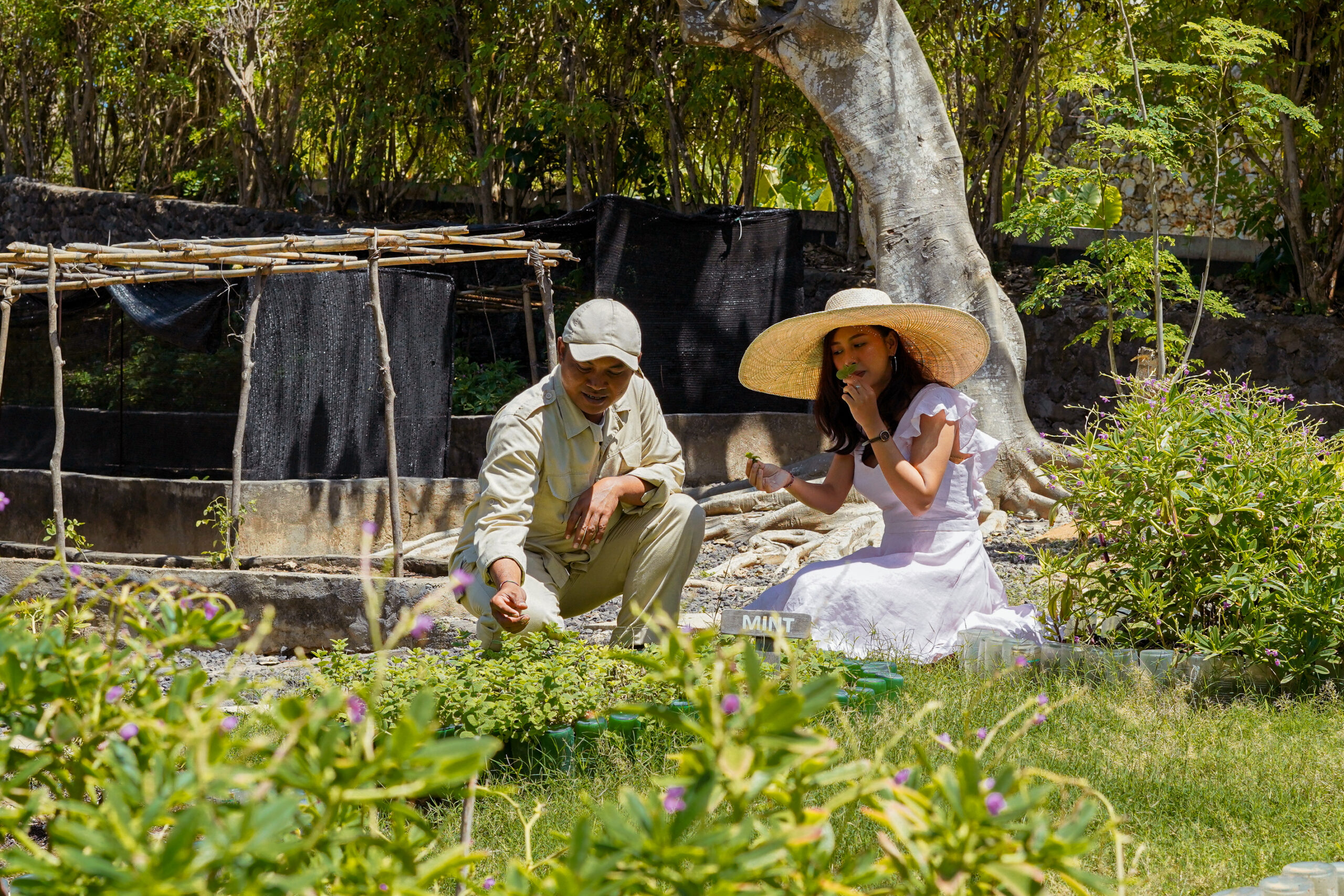
Guests can explore these systems through guided Sustainability Walks, transforming environmental concepts into tangible experiences.
Holiday Inn Resort Bali Canggu: Sustainability in Everyday Practice
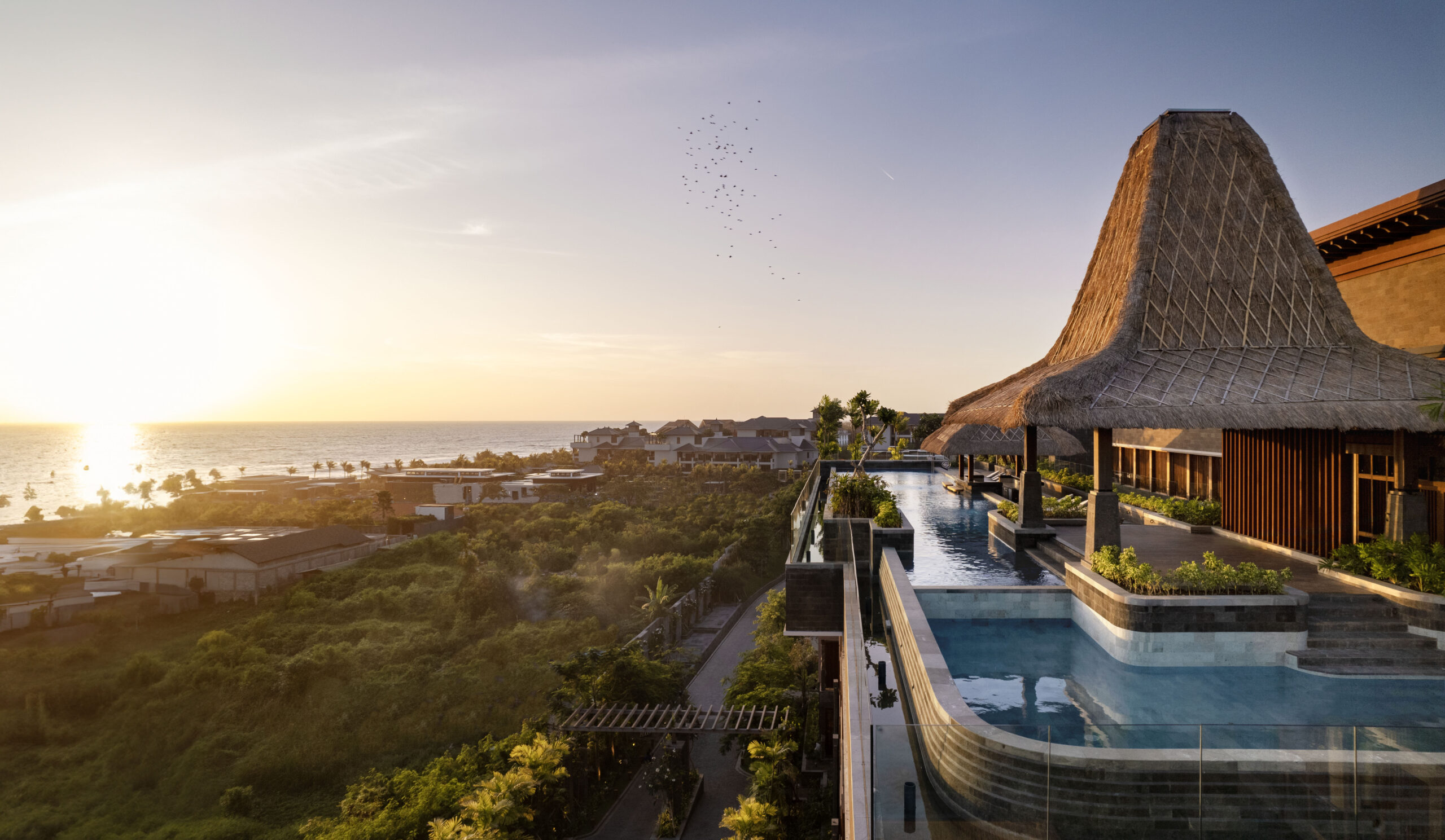
In the lively neighbourhood of Canggu, Holiday Inn Resort Bali Canggu approaches sustainability through small but meaningful daily practices.
Plastic room keys have been replaced with wooden alternatives, while refillable amenities and biodegradable takeaway packaging reduce waste across the property. Dining operations follow a root-to-stem philosophy, using ingredients creatively to minimise food waste. Composting programmes transform kitchen scraps into soil for the resort gardens, and waste separation systems encourage responsible disposal among both staff and guests.

For General Manager Ankit Airon, the philosophy centres on practicality. “Sustainability for us is not a separate initiative but part of how the resort operates and how guests experience their stay. I am a strong believer that sustainability itself must be sustainable,” he explains. “When it becomes practical, measurable, and embedded into daily habits, it naturally shifts from a checklist exercise to an integrated way of working.”
The resort’s sustainability efforts are closely connected to wellness. From sunrise yoga to cycling routes through the village, activities encourage guests to connect with both environment and community.
“Balancing guest comfort with environmentally responsible practices begins with the principle of substitution rather than sacrifice. Our intention is not to reduce comfort, but to deliver it more thoughtfully by using smarter materials, efficient systems, and operational practices that feel seamless to guests,” Airon says.
Wapa di Ume: Turning Waste Into Regeneration
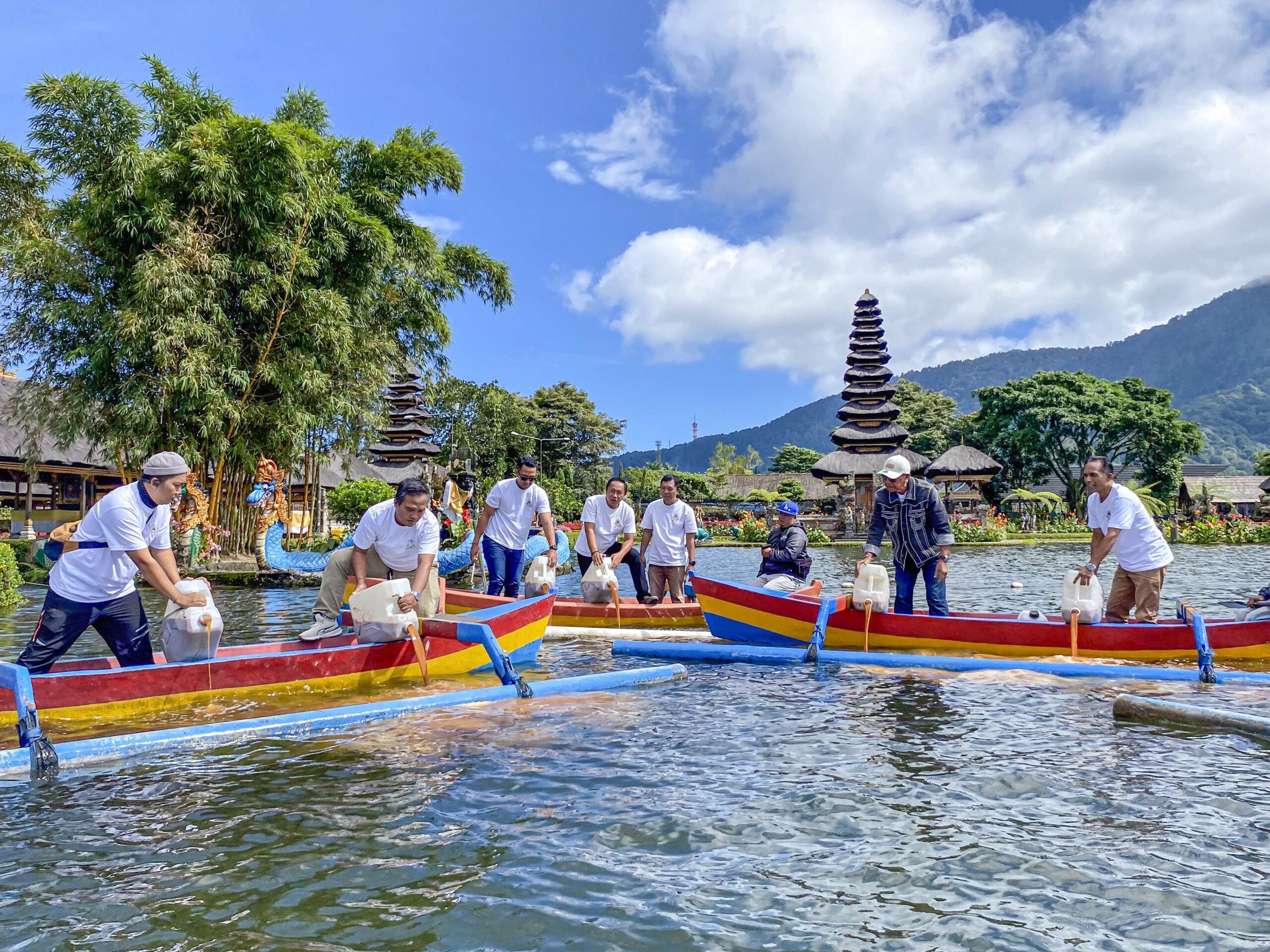
In the cultural heart of Ubud, Wapa di Ume approaches sustainability through small acts of regeneration rooted in Balinese philosophy. To mark its 31st anniversary, the boutique resort launched an environmental initiative releasing 1,000 litres of eco enzyme into the waters surrounding Ulun Danu Beratan, helping support the ecological balance of the lake. The eco enzyme itself was created from fruit waste collected in the resort’s kitchens and bars. Rather than discarding organic waste, the team ferments it with natural sugars for several months, producing a liquid known to help improve water quality and support beneficial microorganisms.
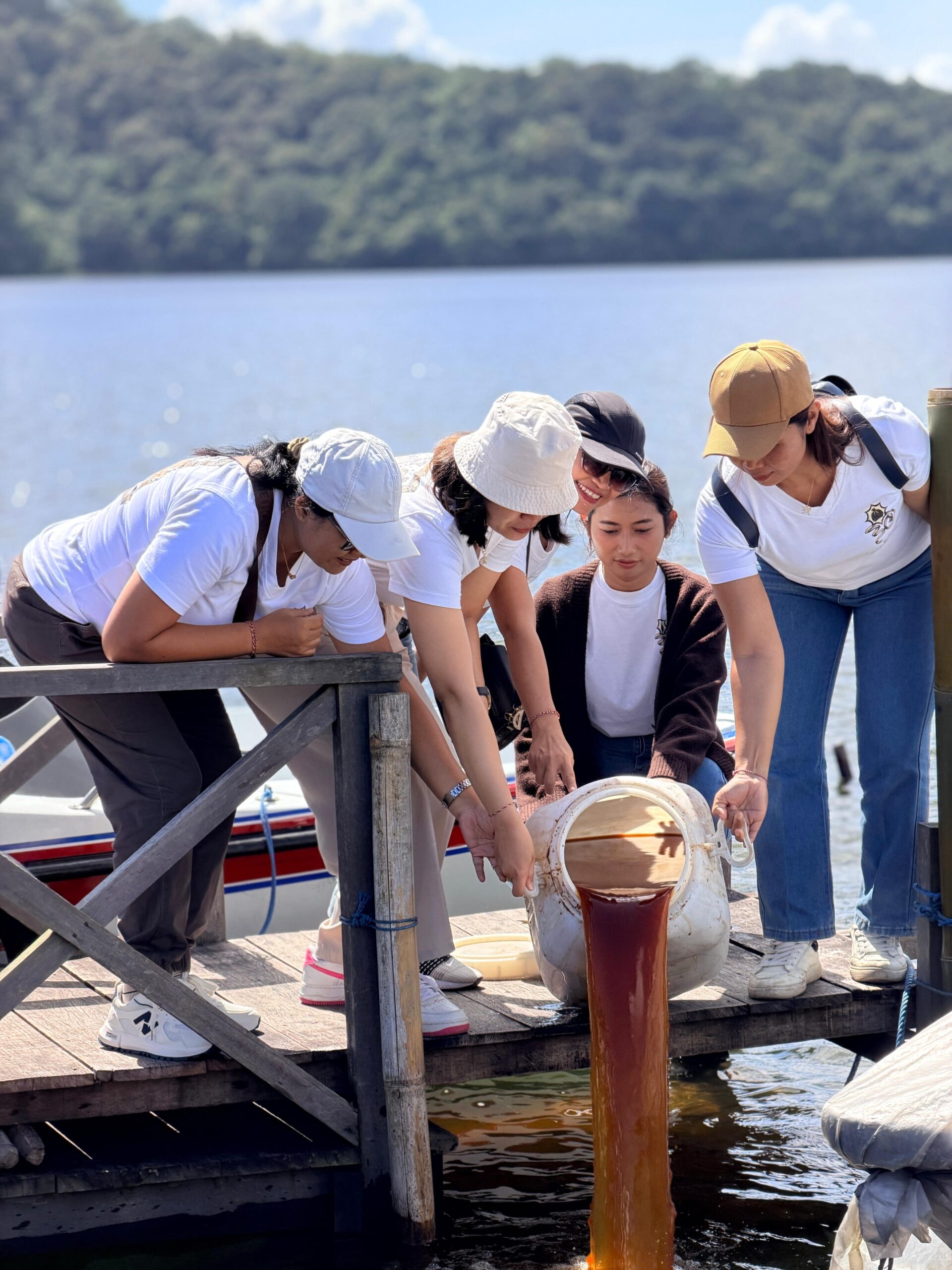
Managing Director I Gede Paskara Karilo explains the initiative grew from concerns about Bali’s waste challenges. “Many fruits used in our kitchens and bars eventually become waste. Instead of discarding them, we ferment the fruit with molasses for several months to produce eco enzyme. In a year, we can process more than 2,000 litres of fruit waste from the restaurants and bars both Wapa di Ume Ubud and Sidemen,” he says.
The programme reflects Tri Hita Karana, the Balinese philosophy of harmony between humans, nature, and the spiritual world. Within this framework, the principle of Palemahan (the relationship between humans and the environment) emphasises the responsibility to care for the environment.
For a resort surrounded by rice fields and rainforest, the initiative represents a continuation of the land’s natural cycles.
BALIAN: Water Shaped by Volcanoes
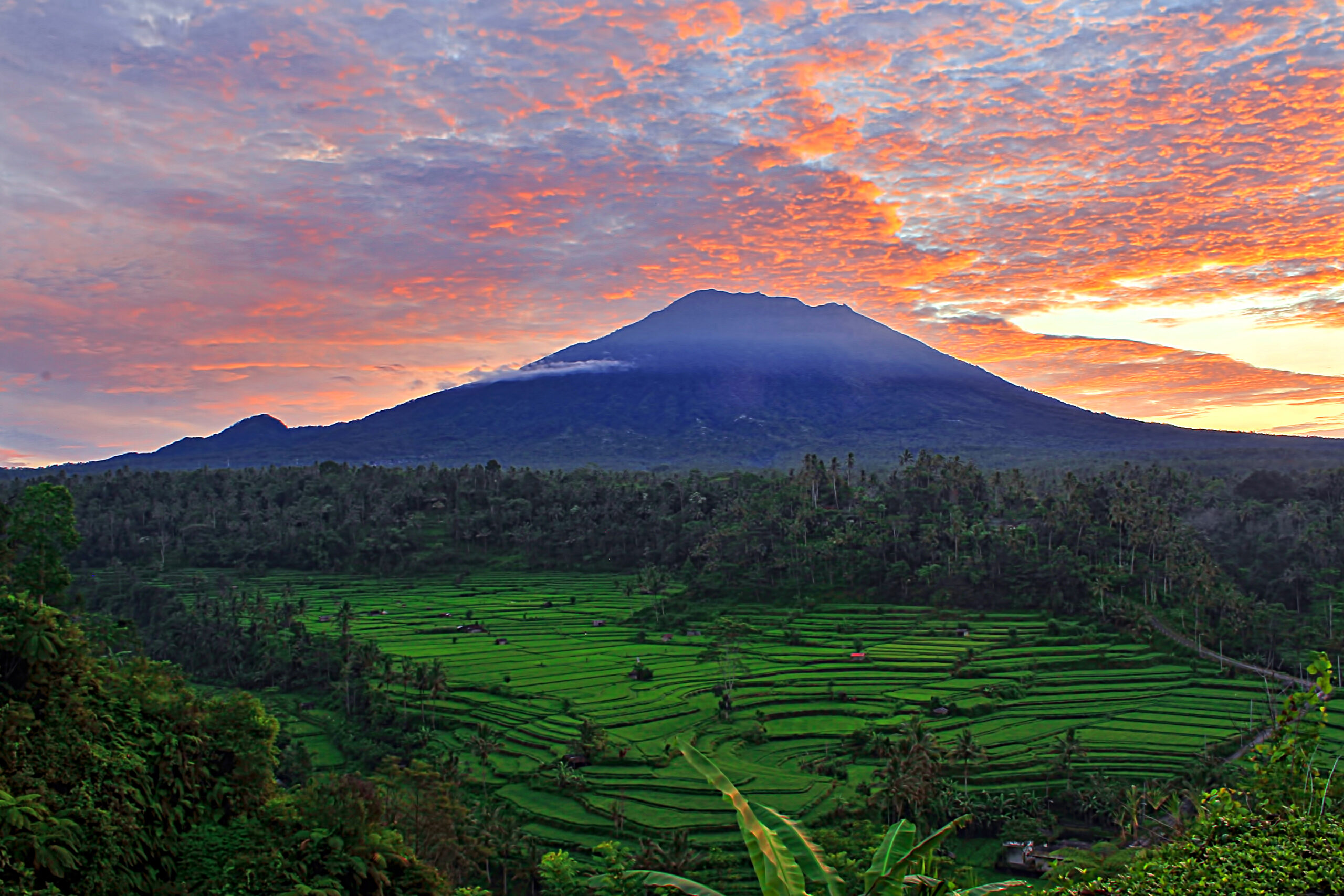
Even water, the most elemental of resources, is being reconsidered through a lens of sustainability. BALIAN, Bali’s first natural mineral water sourced from Mount Agung, began with a simple question: why should an island defined by volcanic geology import its drinking water?
The answer lies high on the slopes of the island’s sacred volcano, where rainfall slowly filters through layers of volcanic rock and sand before emerging as a natural spring. Collected directly at the source and bottled without chemical treatment, the water retains its natural mineral composition.
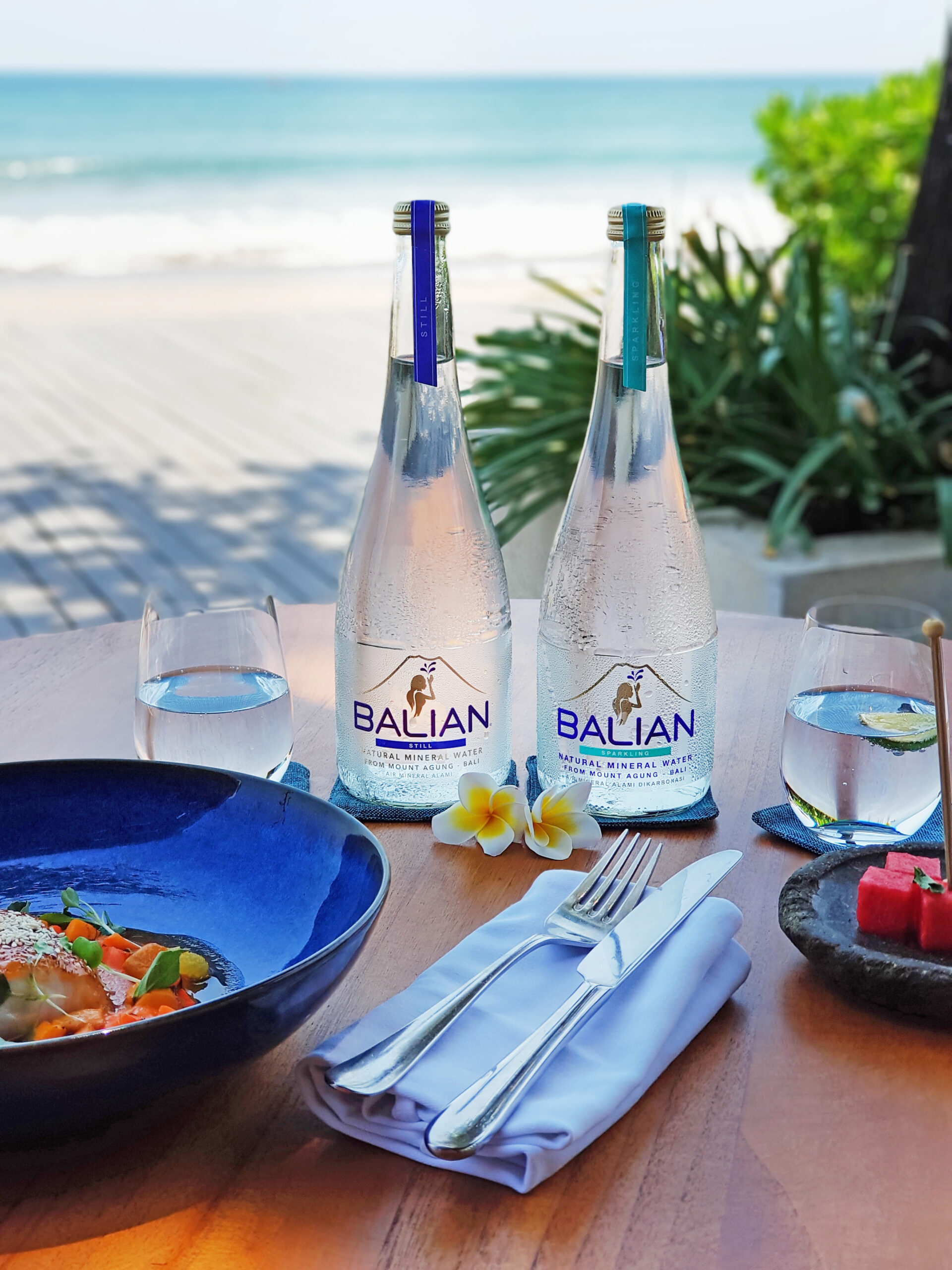
Beyond geology, the brand has embraced a circular approach to packaging through returnable glass bottles, reducing single-use waste while keeping production rooted within Bali. The company also works closely with surrounding communities, supporting temple restoration projects and environmental education programmes for children.
In a destination where sustainability often begins with landscape, BALIAN reminds us that even the simplest element – water – can carry the story of a place.
Across Bali, these initiatives reveal a shift quietly reshaping the island’s tourism narrative. Sustainability is no longer confined to policies or marketing language. Instead, it is being expressed through architecture, community engagement, resource management, and everyday operational choices.
Together, these brands suggest a new possibility for Bali: an island where hospitality does not merely coexist with nature, but actively participates in its regeneration.
Read the full story in epicure Indonesia April-May 2026 issue out 1 April 2026.