

The new language of luxury has shifted from what travels can show to what the body can feel: calmer nerves, clearer focus and deeper sleep.
A decade ago, a wellness upgrade might have meant a better mattress, a bigger spa, a stronger minibar. Now the brag is subtler. The most coveted perks in travel are increasingly measured in outcomes: deeper sleep, steadier mood, a calmer nervous system, a clearer head the morning after landing. High-end hotels and retreats across Asia have noticed, and they are building programmes around one idea: the modern traveller is paying to feel different. That wellness is the new language of luxury
This new language of luxury shift has changed what premium hospitality sells. The object is no longer a product that sits in a suite, it is an experience that stays in the body. Breathwork at sunrise, sound sessions that leave people teary-eyed, red-light recovery pods, IV lounges, wearable-led protocols, sleep coaching that treats jet lag like a solvable design problem. They are becoming the main event for a certain kind of traveller: people who treat wellbeing as taste, and taste as status.
What follows is a map of the new experiential economy, where the most prized souvenir is regulation: the sense that the system has returned to baseline, or better than baseline, and that the mind has stopped sprinting.
Breath as the new champagne
Breathwork does not look like luxury on paper. Yet that is part of its appeal. In a time of constant consumption, a guided breathing session offers something money rarely can: quiet, privacy, and time without the pressure to produce anything. At the top end, breathwork is packaged as a performance tool as much as a spiritual practice. The appeal sits in the framing. Stillness becomes a signifier, and restraint becomes the new flex.
Sound, movement, and emotional release culture
If breathwork is a quiet status symbol, sound and movement are its public siblings. Sound, light, and room design are being treated as active ingredients: colour therapy, resonance-led sessions, purpose-built spaces that steer the nervous system toward calm. The concept is less about one modality, more about how multiple cues are staged in a single flow.
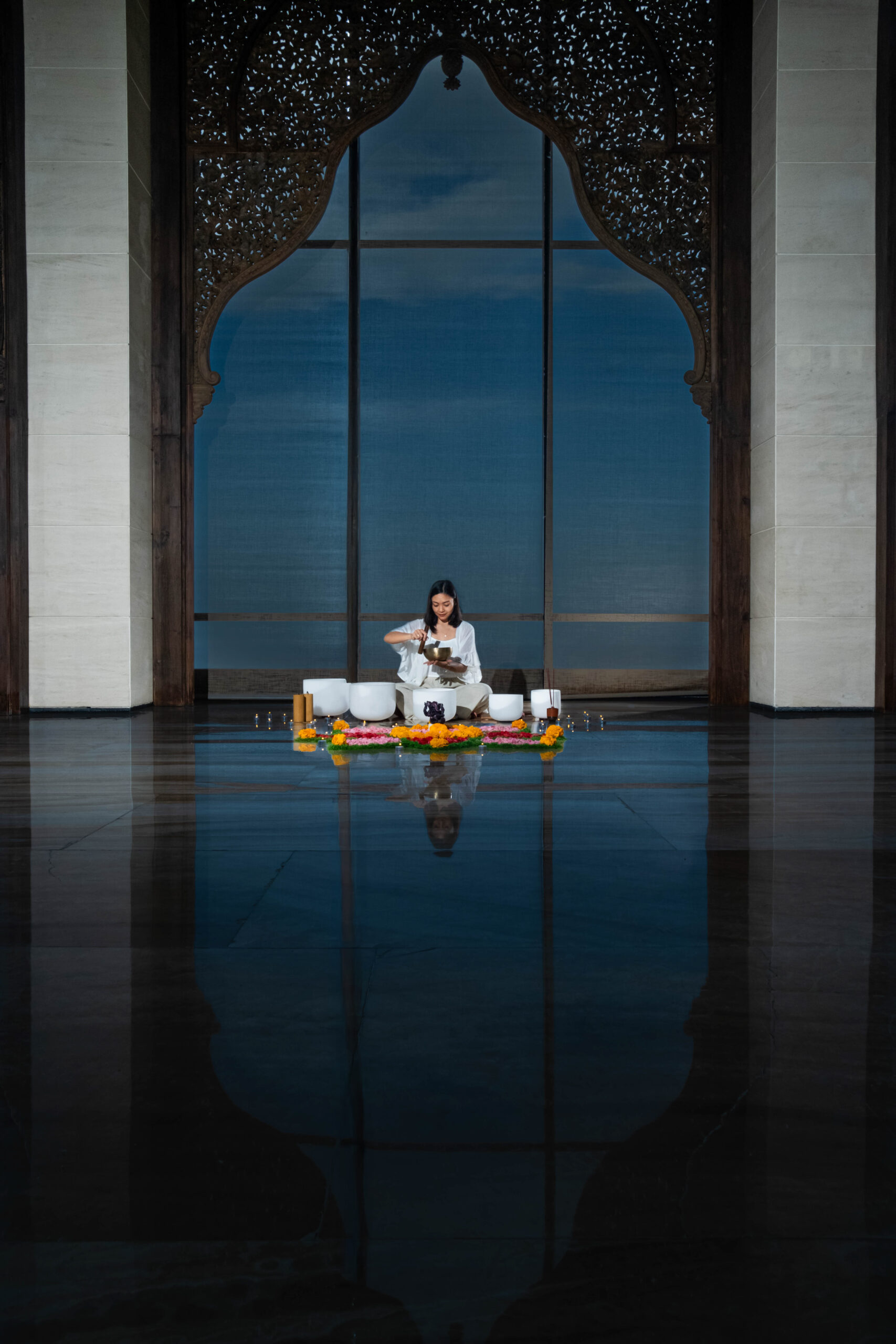
Sound sessions are a clear example of new language of luxury. Crystal bowls, resonant instruments, and carefully tuned rooms have become a staple in retreat programming, and increasingly in city spas that want to offer something beyond skincare.
Movement-based wellness is travelling in a similar direction. Ecstatic dance sessions and somatic work are increasingly treated as legitimate parts of recovery, less about fitness and more about emotional regulation. Some travellers want a reset that feels like connection, not homework.
Biohacking becomes boutique luxury
Biohacking used to carry a whiff of garage science: a personal stack of supplements, a cold plunge, a wearable dashboard that never stops demanding attention. The newer version is dressed differently. It is curated, designed, and often housed inside the architecture of a resort.
A growing slice of luxury wellness borrows tools from performance and preventive care: IV infusions, hyperbaric oxygen, cryotherapy, red-light therapy, ozone-style treatments. The language now is less about hacking the body and more about recovery, longevity, and performance with a softer edge.
In Asia, this has led to properties that combine clinical-style procedures with retreat aesthetics. Integrative wellness rituals can be found integrating traditional therapies with procedures such as intravenous formulas and hyperbaric oxygen therapy, and programmes that also address stress-linked sleep issues.
Sleep is the ultimate upgrade
Among all the new status rituals, sleep may be the most persuasive because it is the one outcome everyone understands. Better sleep changes everything: mood, appetite, skin, focus, patience. It is also the first thing that collapses under long-haul travel, late dinners, alcohol, and screens.
Sleep tourism has grown into its own genre of new language of luxury. Instead of selling only relaxation, hotels increasingly sell rest as a designed experience. A number of luxury hotels and resorts in Asia have begun offering sleep-focused packages and retreats aimed at improving rest quality.
Where this leaves modern luxury
The interesting part of this shift is that people want the feeling of health to be curated, private, and beautifully delivered. The new luxury economy is built on experiences that promise a change in state: calmer, lighter, clearer, steadier.
These rituals also fit the new travel personality. Many high-spend travellers are no longer chasing a single peak moment. They are chasing continuity: to land, recover quickly, sleep well, and still have energy for dinner. Each treatments solve different problems, yet they share the same goal: a body that feels looked after, and a mind that can finally slow down.
Hotels and retreats are responding by treating wellbeing more like a narrative with outcomes in the new language of luxury. The most persuasive properties will be the ones that keep their language grounded, their results believable, and their rituals tied to real behaviour change. Because in this new definition of status, the souvenir is not the bathrobe.
It is waking up and noticing that the head is quiet.
Signature Experiences
From sleep optimisation to crystal-led rituals, hotels are packaging stillness as the ultimate indulgence of the new language of luxury.
Mauna Sleep Retreat at The Apurva Kempinski Bali
Inspired by Bali’s Nyepi or Day of the Silence, the programme highlights elements such as sleep optimisation sessions, sleep meditation and sound healing. The premise is not mere a spa day, it is a full reset built around quiet and rest, treated as a rare source.
Nervous System Rebalance & Metabolic Reset at COMO Shambhala Estate
A programme designed to help guests shift away from a fight-or-flight state and into a calmer parasympathetic state, it includes meditation and bodywork. Complete the experience with the Metabolic Reset to balance the metabolism with a sequence of curated therapies.
Meru Raga at The Meru Sanur
The experience begins with a sacred moon scrub, gently exfoliating the skin to reveal a soft glow. A personalised full-body massage follows, intuitively tailored by your therapist to address individual needs. The ritual then moves into a calming cranial technique for the face and head, enhanced with traditional jamu facial care and the subtle resonance of crystal frequency therapy to encourage deep relaxation and energetic balance. For those seeking an extra layer of renewal, the experience can be elevated with a 7-chakra LED light facial, designed to restore radiance while supporting holistic wellbeing.
Celestial Light Ritual at Four Seasons Resort Bali at Jimbaran Bay
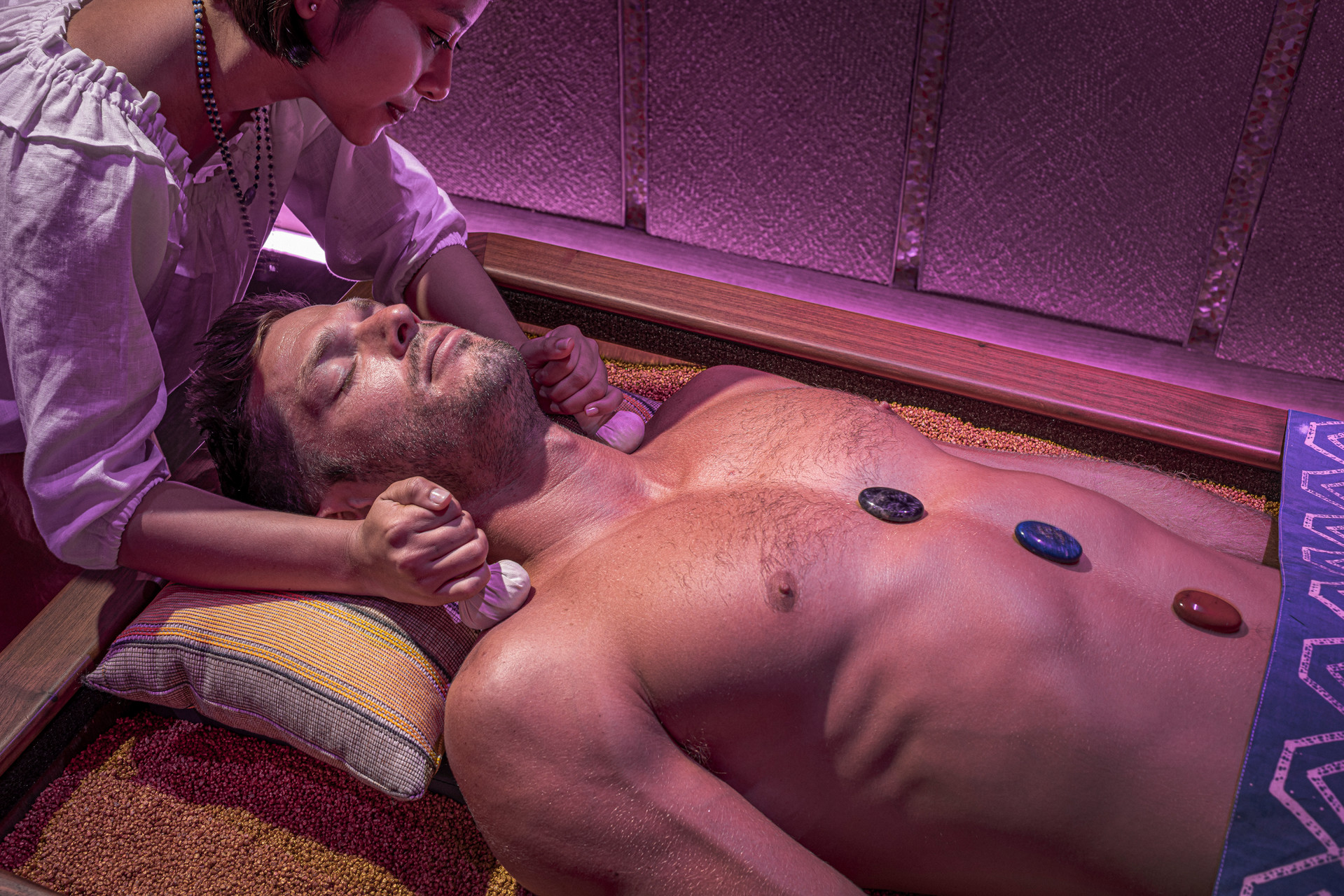
The spa’s Celestial Light Ritual takes place in The Illume Room and combines chromotherapy lighting, gemstone oils, crystal tools, and singing bowls as part of a single treatment flow. This is wellness presented as atmosphere and sensation, with a clear emotional aim: settle the mind, ease the body, leave lighter than arrival.
Anti-Cellulite Maderotherapy at ASAI Village Jimbaran, Bali
A body-contouring massage using anatomically shaped wooden tools to stimulate circulation and lymphatic flow, with the aim of improving skin texture and reducing the look of cellulite. The treatment works through repeated rolling and targeted pressure to warm tissues and support the body’s natural drainage processes. It suits guests who prefer hands-on methods over machines, and who want a firmer, smoother feel without invasive steps.
Read the full story in epicure Indonesia April-May 2026 issue out 1 April 2026.