

Singapore chef-author Denise Fletcher shares the story behind feng — the labour-intensive Eurasian-Kristang Christmas curry — and how this heritage recipe continues to anchor her family’s festive celebrations.
TEXT BY DERRICK TAN, PHOTOS BY MARCUS LIM
With a rich, mixed heritage in her family tree, chef-author Denise Fletcher rustles up the tedious feng dish, a Eurasian-Kristang Christmas staple, without fail every year for her family.
“It is admittedly a bit baffling why such a humble, everyday ‘poor man’s dish’ would be given such an elevated, celebratory status,” Denise explains. “But food history has always been a bit murky, and there will always be almost as many versions as the number of persons asked,” says Denise, who’s upholds documenting and preserving ethnic cuisine and was the executive chef at Quetin’s Bar & Restaurant.

This offal-centric dish is the other robust, concentrated curry which every Eurasian can recognise immediately. “By design, [feng] is a dish of off-cuts, of strong flavours tempered with spices, born of the need to extend limited food resources in the absence of modern preservation techniques, and linked to the history of Portuguese seafaring and colonisation in our region. Its component parts are lungs, liver, heart, intestines, sinewy flesh and the belly cut, cooked in everyday Southeast Asian spices and aromatics like shallots, garlic, ginger, pepper, turmeric, cumin, coriander, cloves, and more, with its shelf life somewhat extended with vinegar. None of these ingredients is out of the ordinary; all can be found in any supermarket, wet market or corner shop, throughout the year,” she shares.
Feng, alongside familiar Christmas plates like curry debal, Christmas chicken pie, achar, roast beef, sugee cake with marzipan, and more, fills up Denise’s home festive spread.
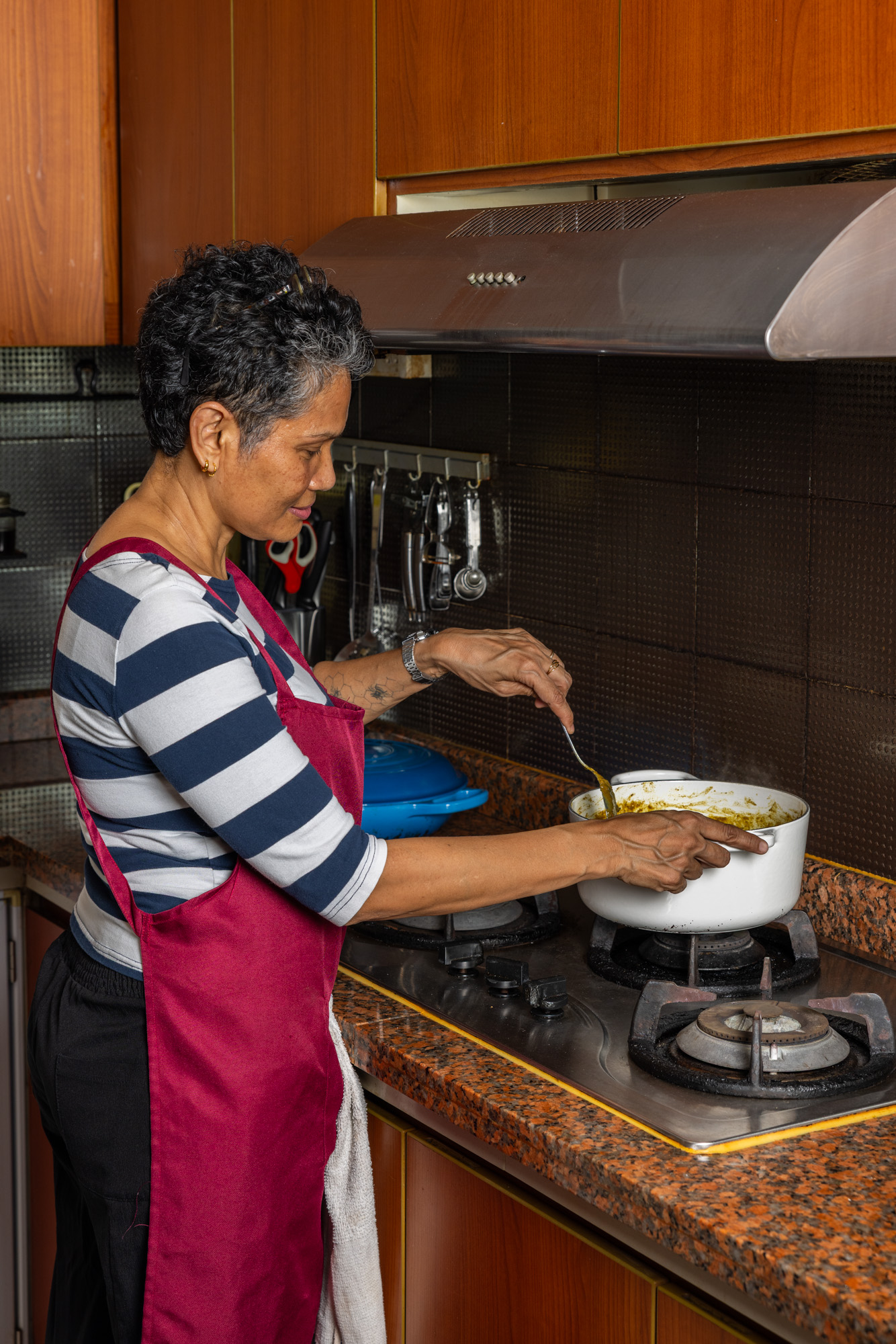
“Feng is a dish, that without fail, appeared on our Christmas table during my childhood. My late mother and grandmother would always cook it together, as it entailed so much work. So laborious it is that my grandmother was the only one of her sisters who prepared it – they would all visit at Christmas, just to have a taste of her feng. What makes it special is the care and labour involved: buying the different cuts, individually cleaning and prepping them well enough to dispel or minimise the gamey aromas. It can easily take six to eight hours, from start to finish, depending on the meat one chooses,” shares Denise.

She continues, “Despite the very involved preparation, I try my best to carry on this annual tradition in my home, as it holds so many warm memories for me of my mother and grandmother and all those visiting grandaunts whom I otherwise never saw.”
Denise’s Christmas family feasts these days “are a bit different” from the typical homely version one can expect, as her husband is not Eurasian.
“So the Eurasian influence is solely from me, after my mother has passed. We have more baked desserts than is typical, as I love baking. Additionally, I am the only soup lover in the house. But we skip the traditional Christmas soups like porku teem (pig trotter and black bean soup) and mulligatawny (a curry-like shredded chicken soup).”
“Many Eurasian families also consider beef semor (or smore) a Christmas dish, although in my childhood home, it was not served at Christmas. But sometimes, [it was included] on New Year’s Day as it is much easier to cook than most Christmas dishes — and it still feels somewhat celebratory.”
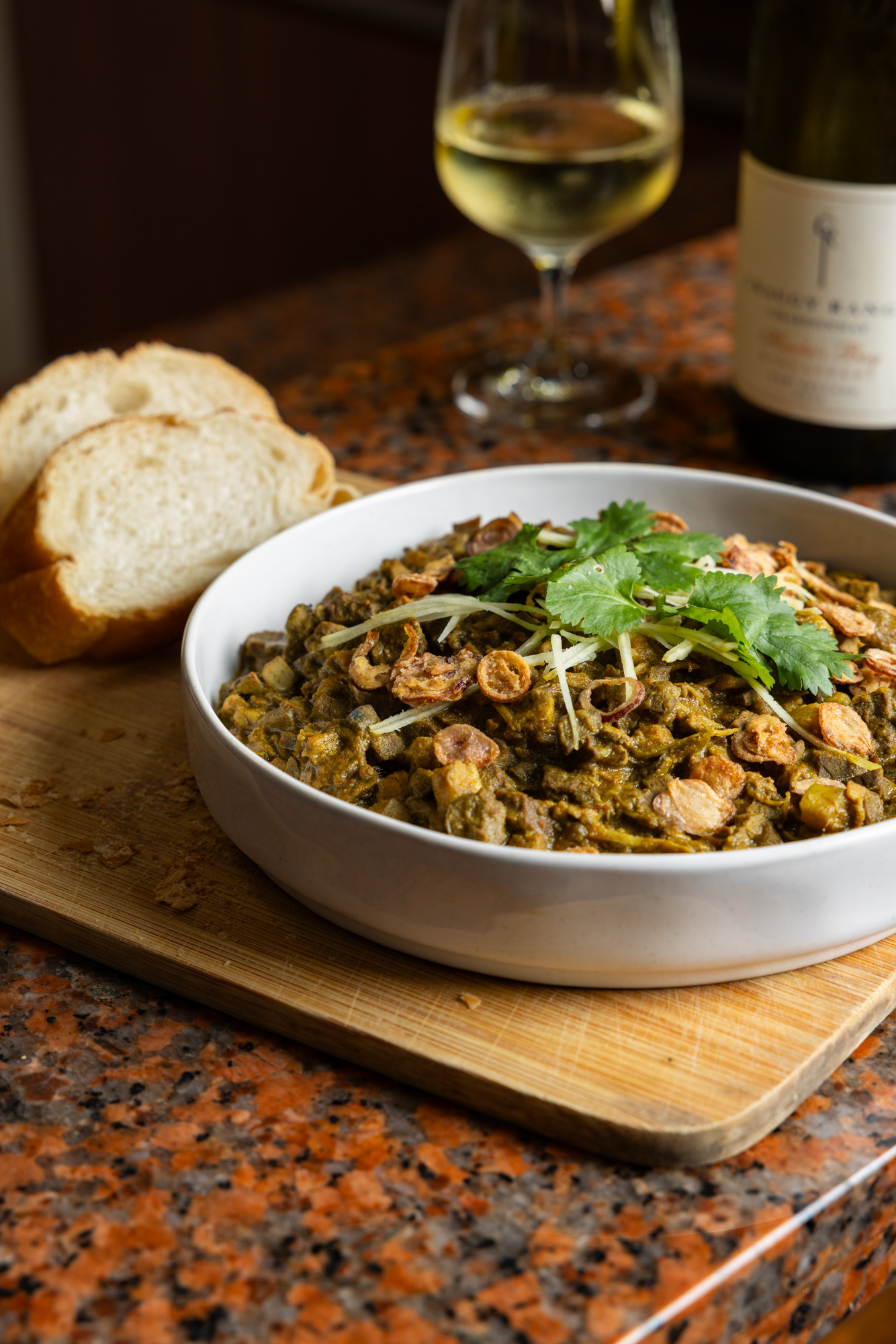
For the past Christmas feasts she enjoyed as an adolescent, no other word but “magical” suffices in describing them. “Everything was made from scratch with the best quality ingredients [my mother] could afford. The memory of how I felt when I woke up on Christmas morning, to see the spread of pies, cakes and tarts on the table, the pile of wrapped presents under our money plant, and smell the curries, roasts, and soup simmering on the stove – is what still drives me today: to try and give my family the same joy my mother gave me on all those Christmas mornings. After almost six decades of Yuletide celebrations, my childhood Christmases, coloured with equal parts frenzy, drama and my mother’s palpable love, remain the most memorable of my life.”