

At Mandarin Oriental Qianmen, Beijing, in-house fine-dining and proximity to Beijing’s traditional eateries make for a hyperlocal foodie holiday. Text by: Grace Ma
In Beijing’s hutongs — narrow lanes separating rows of siheyuan (courtyard houses) — ordinary folk raise families and build communities, often for generations.
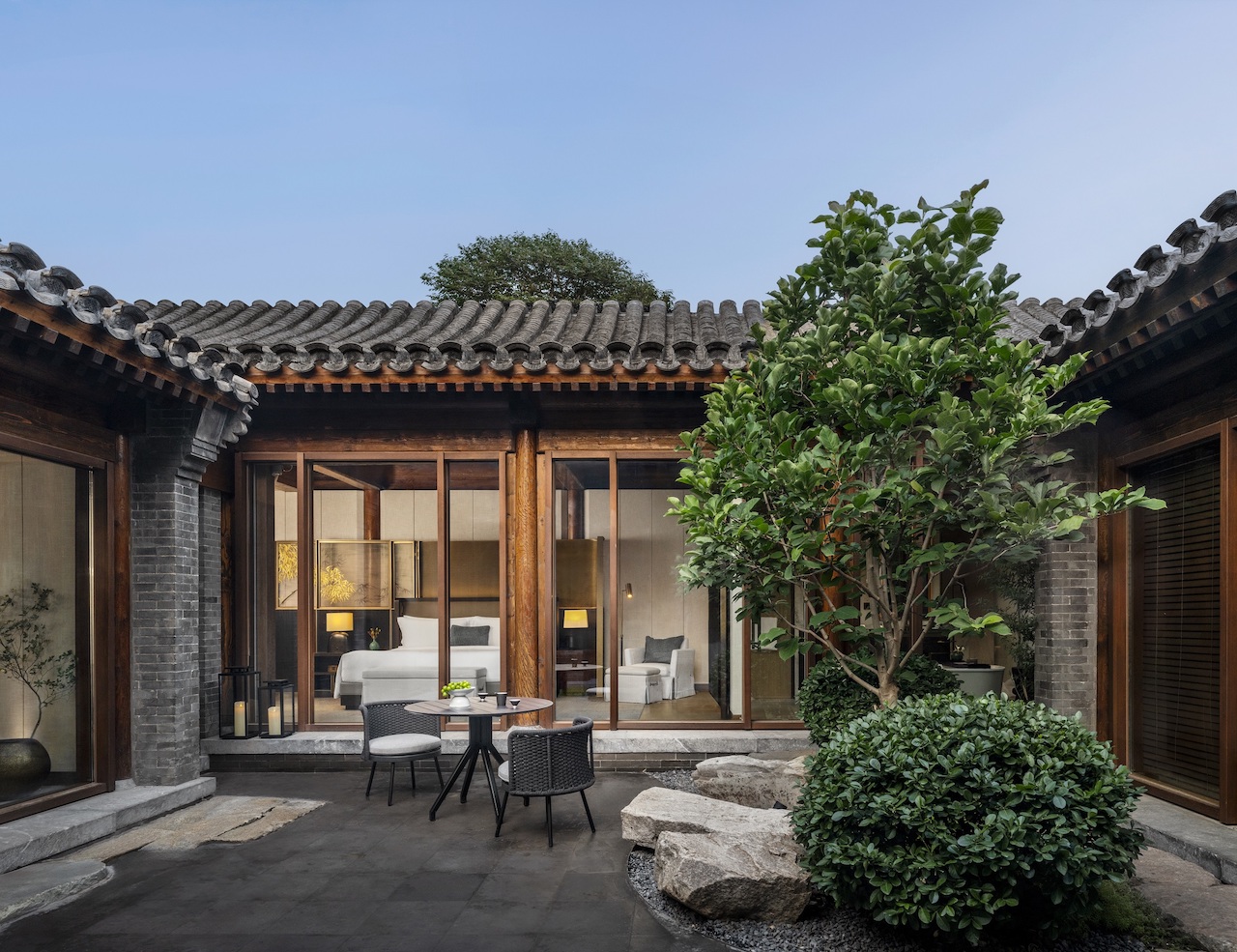
Mandarin Oriental Qianmen, Beijing brought hutong living to another level when it opened in September 2024 along Beijing’s famous Central Axis. Its 42 courtyard suites are spread across eight alleyways of the Caochang hutong, interspersed among actual homes.

From sensitively restored architecture, including original timber beams, bricks, tiles and carvings, to contemporary details like enamel flower screens and calligraphy-inspired art, it is hard to imagine these lanes once stored straw for livestock.
The local vibes extend beyond design to thoughtful culinary offerings. The hotel is the gateway to Beijing’s famous snacks in many ways. For instance, the breakfast spread at Italian restaurant Vicini included sweetened soy milk, fried dough fritters and braised pork intestines in a light, flavourful broth, along with meat pies, stuffed meat pancakes and guotie (pan-fried dumplings).

Vicini is the epitome of its name, which means “neighbours” in Italian. After arriving on a red-eye flight and exploring all day, a simple dinner of prosciutto and tagliatelle alla boscaiola, cooked with sausage, asparagus, seasonal mushrooms and a cream sauce, hit all the right comfort notes. If you want your pasta al dente, let them know because the locals prefer theirs well cooked.
Tiramisu was on the dessert cards, but head chef Edoardo Luongo noticed my fatigue and suggested sgroppino instead. This is typically a lemon sorbet mixed with prosecco and vodka. The Vicini version combined lemon sorbet and milk ice cream, and Luongo finished it with a smaller dash of prosecco, limoncello and lemon zest for a refreshing ending.

Yan Garden by Chef Fei serves Cantonese and Chaozhou dishes in a refined setting, where floor-to-ceiling glass panels look out to a serene courtyard with a 60-year-old mahogany tree. The Beijing outpost is by celebrity chef Huang Jinghui (or more known as Chef Fei) who also oversees the two Michelin-starred Cantonese restaurant Jiang by Chef Fei in Mandarin Oriental, Guangzhou.

Yan Garden’s Chinese executive chef Peter Chen and his team deliver a finely tuned balance of texture and taste across the menu. Everything from dim sum to soups and noodles was cooked to precision with hints of European flair in items like the baked wagyu beef tart dim sum and spiny lobster with creamy garlic sauce. The signature deep-fried pigeon was a crackling dream while the poached luffa held all the richness of its chicken broth well without being soggy. Cold desserts of stewed yellow fungus and Feng Shui pear as well as a Chaoshan aged bergamot sorbet landed the respective meals on a gentle sweet note.

I didn’t have to go far for a good night cap either. The hotel’s one-year-old Tiao Bar just launched a new menu, an ode to hutong stories. The blending of the old and new was expressed in The Old Cucumber, a savoury-sweet melange of osmanthus wine and dry sherry brightened by a swish of prosecco fizz and a piquant kick from the jalapeno garnish. Around me, the young, trendy and a smattering of the old-money set were gawking over aesthetically pleasing and tastefully nuanced cocktails like the wine slushie-lookalike Beijing Sour and Chit Chat, an Old-Fashioned riff with buttery popcorn notes.
Back in the suite, new snacks appeared every day; from aiwowo, a halal Beijing delicacy of glutinous rice balls filled with sweet sesame sugar, to shaqima, a crispy Manchu confection made from strands of fried dough coated in syrup. Post-massage treats included fungus and pear soup and a mochi-like pumpkin cookie.
Service was sharp yet discreet, and activities like kite-painting and tea appreciation were customised to my interests. Guests can sign up for such activities for a fee. The session with tea sommelier Lawrence was especially enjoyable. Upon hearing that I had bloating he chose a Pu’er Ripe Tea that soothed the system better. He was such a rich trove of tea knowledge and philosophical musings that our pleasant chat felt way too short. The way to a man’s heart is through the stomach, and Mandarin Oriental, Qianmen certainly touched mine through every sip and bite.
HUTONG HUSTLE
The real taste of Beijing lies among the hutong alleys and there’s plenty to discover in the hotel’s neighbourhood. Here are a few at the doorstep or within a 20-minute stroll or 10-minute Didi ride away (the latter is highly recommended during the hot summer months).
Ping An Guo Tie (Xi Xing Long Street, near Caochang 5th Alley)
Ask about guotie and this place often comes up. There are options stuffed with pork, lamb or chives, as well as dishes like spinach, shredded tofu and pig trotters.

Qianmen Da Ma Hua Jing Wei Noodles (Xi Xing Long Street, near Caochang 5th Alley)
Run by a friendly proprietress, the restaurant’s Old Beijing Zhajiang noodles are a must-try, as well as its kung pao chicken, hairtail fish stew and fried scallion pancakes made on the spot.

Chen Ji Braised Pig Intestines (Langfang Ertiao Hutong)
This is widely acknowledged as the most traditional maker of this street food in Beijing. Its rich and deeply satisfying broth brims with pig offal, beancurd and rice cakes without any funky odours.
Jingyi Restaurant (Liulichang East Street)
Bring a group of at least three to try the many generously portioned Hubei dishes at this small Michelin Bib-Gourmand eatery located in a gentrified hutong. Among the stars are crunchy fried celtuce with bacon; egg drop glutinous rice wine, a warm non-alcoholic beverage blend of glutinous rice, egg and sugar; and the satisfying braised tofu with fish roe best savoured with rice.